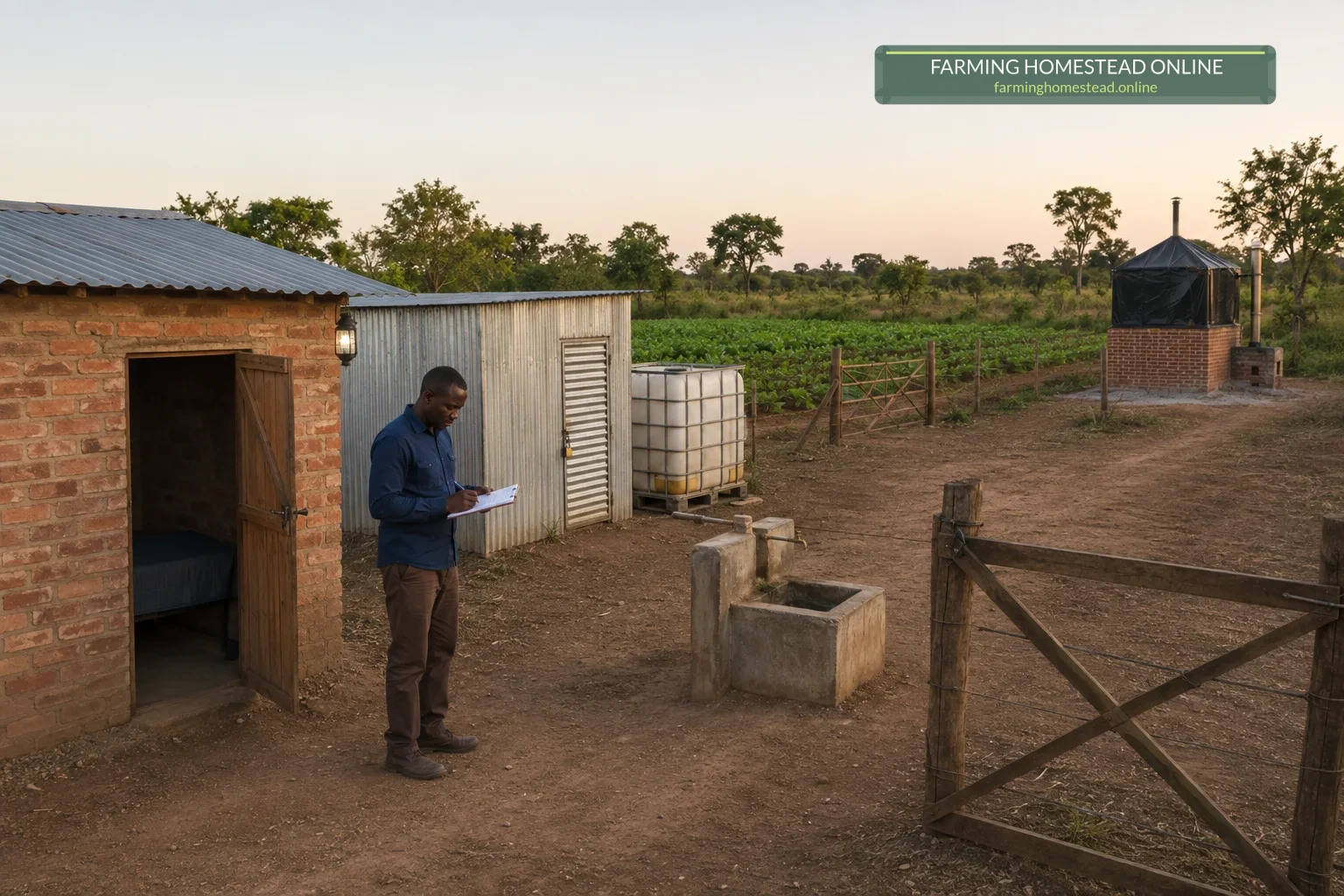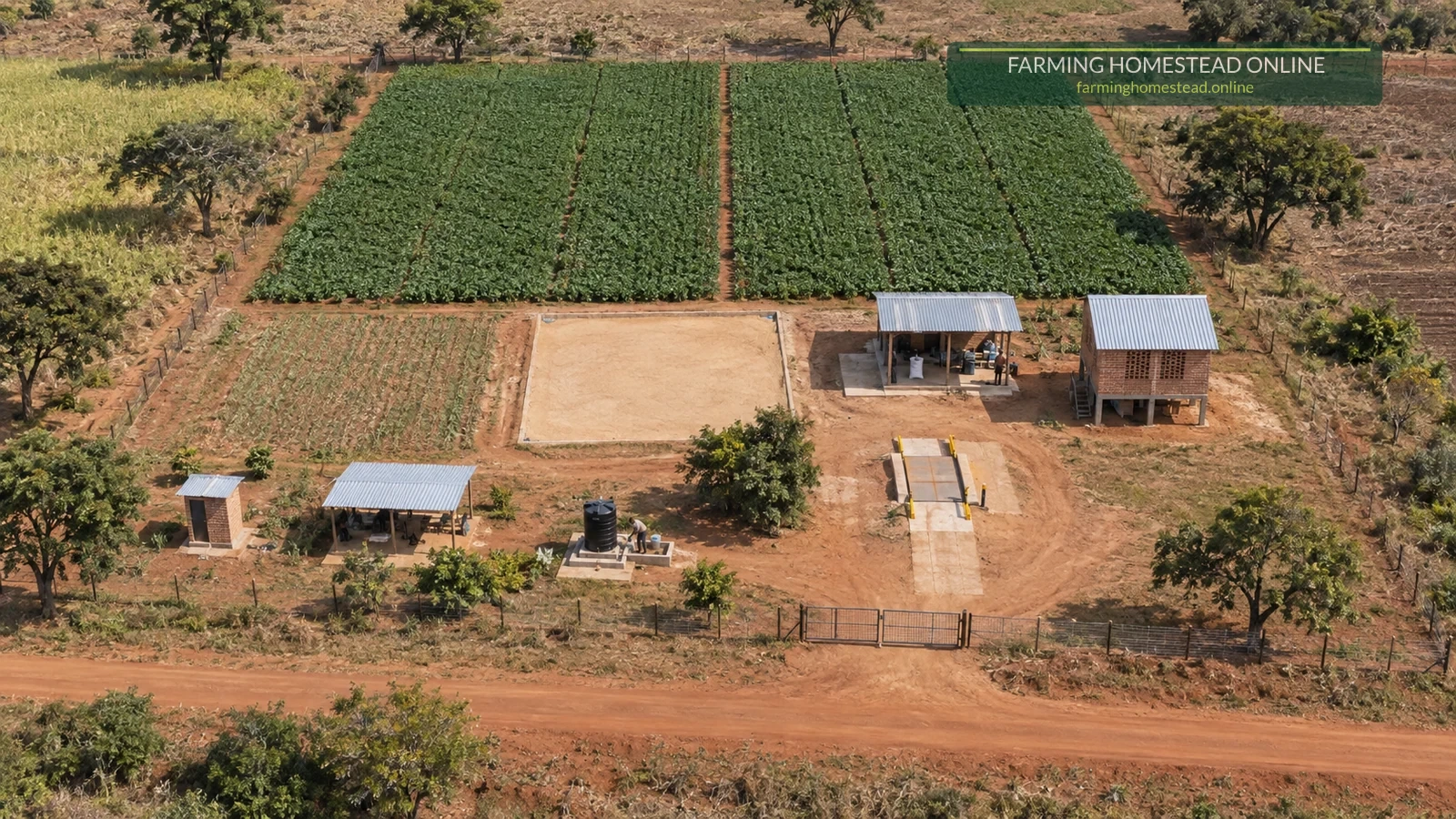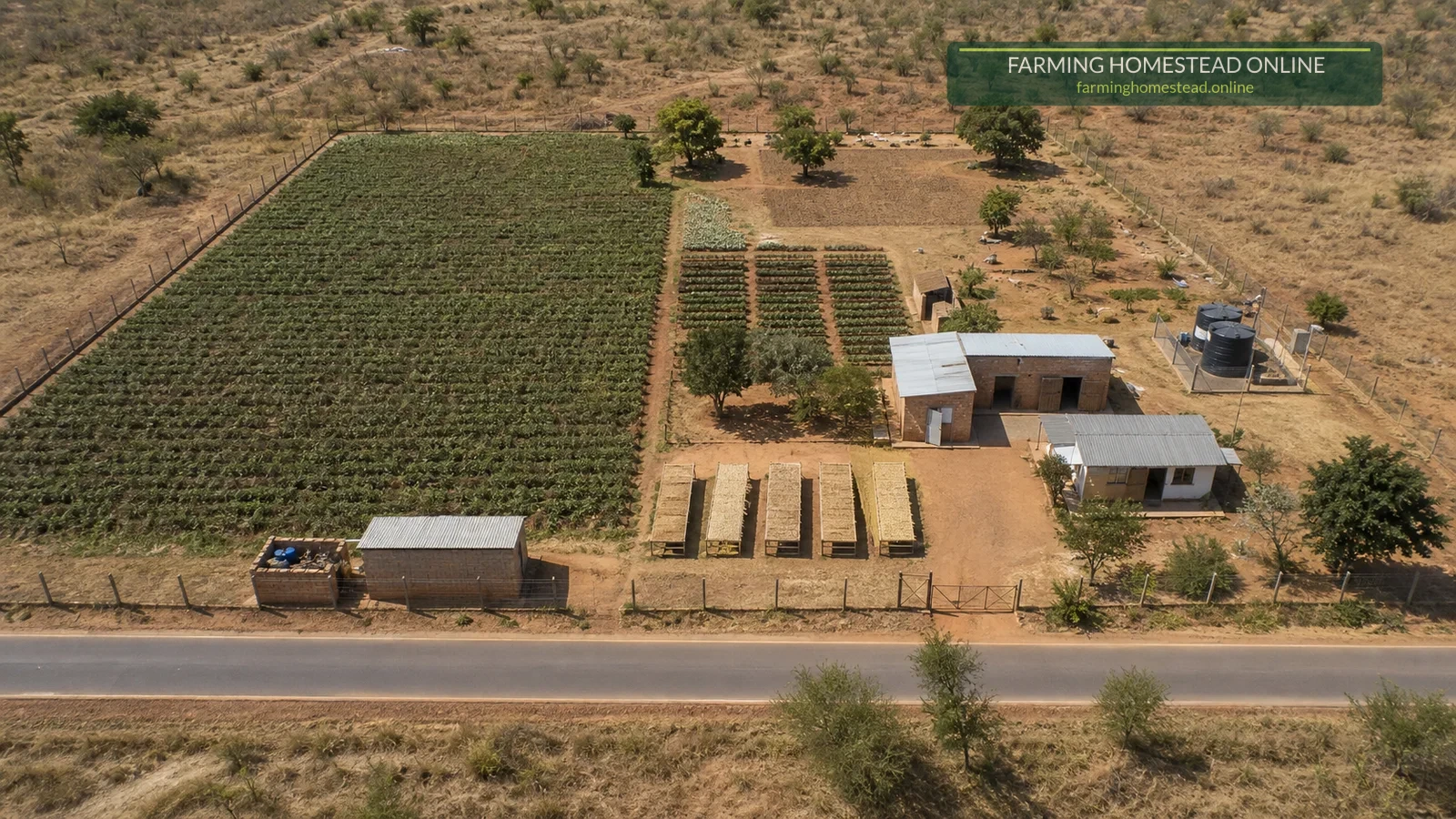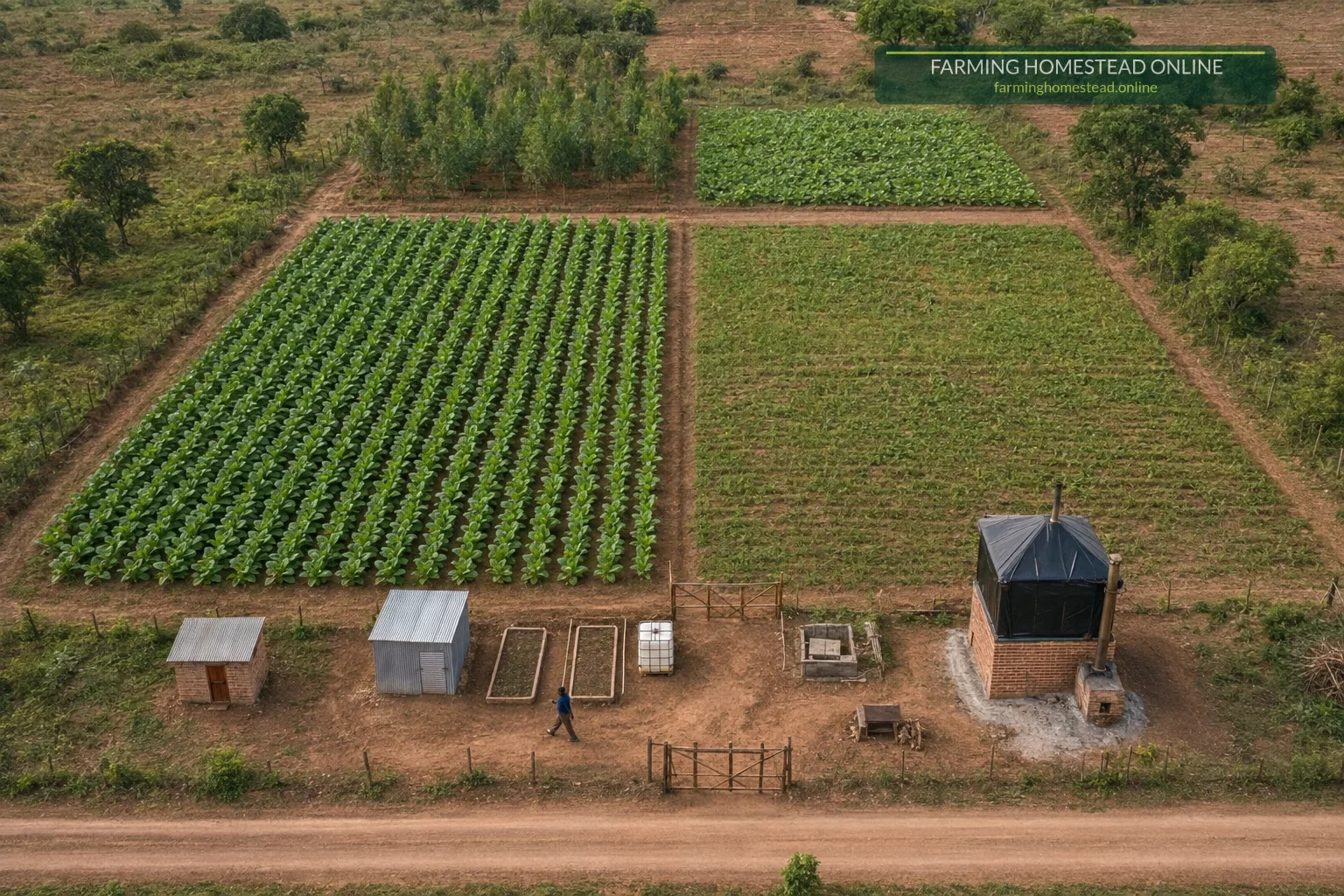
STARTER DECISION: Use 0.50 hectare, not all two hectares and not 0.75 hectare yet. One Kutsaga-style low-income plastic barn is designed around 0.50-0.60 hectare. Keep the rest for food, rotation, a future fuel woodlot, accommodation, storage, sanitation, access and later expansion.
What must be ready
- TIMB grower registration, a matching bank name, biometrics and a lawful auction or approved-contract route.
- A soil result, certified seed, suitable variety and written fertiliser and crop-protection plan from Kutsaga or Agritex.
- One safely built 4 m × 4 m × 4.5 m plastic barn, an adult operator, instruments, fire controls and enough lawful sustainable curing fuel.
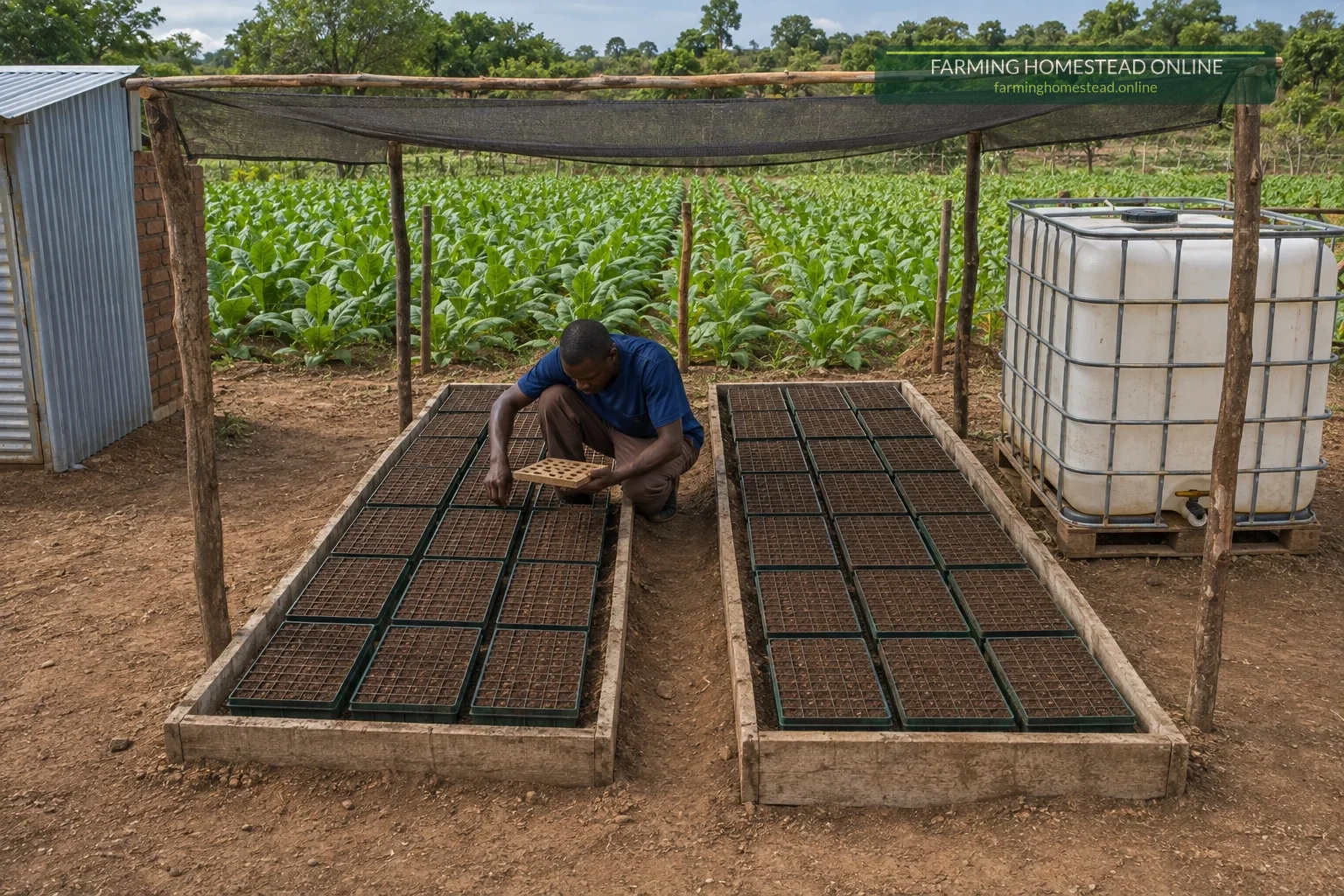
- Clean floatbed water, 44 reusable 200-cell trays and daily nursery care.
- Enough cash to finish curing, grading, approved baling and delivery.
Land, money and time
The layout uses two hectares but plants only about 7,440 tobacco stations on 0.50 hectare. Expected crop-ready capital plus first-season cash is about US$4,315, excluding land and owner labour. A modest separate hut, lockable leaf store and BVIP lifts the expected first-year planning need to about US$5,875. The route runs for nine working months from a July seedbed and registration phase to a March first-sale target; rainfall can move harvest and sale dates.
What the complete Pack includes
A 35-page beginner PDF, editable 12-sheet workbook, line-by-line buying list, nine-month cash route, floatbed and transplanting instructions, weighed fertiliser calibration, low-cost barn bill of materials and safety gates, curing stages, grading and bale rules, registration and first-sale checklists, dated Facebook field observations, official sources, and exactly 14 realistic scenario images plus six working graphics.
Could this Pack work for you?
First compare the Pack with your land size, location, water, budget and experience. Then visit the site and complete the survey, council, water and other local checks that this project needs.