
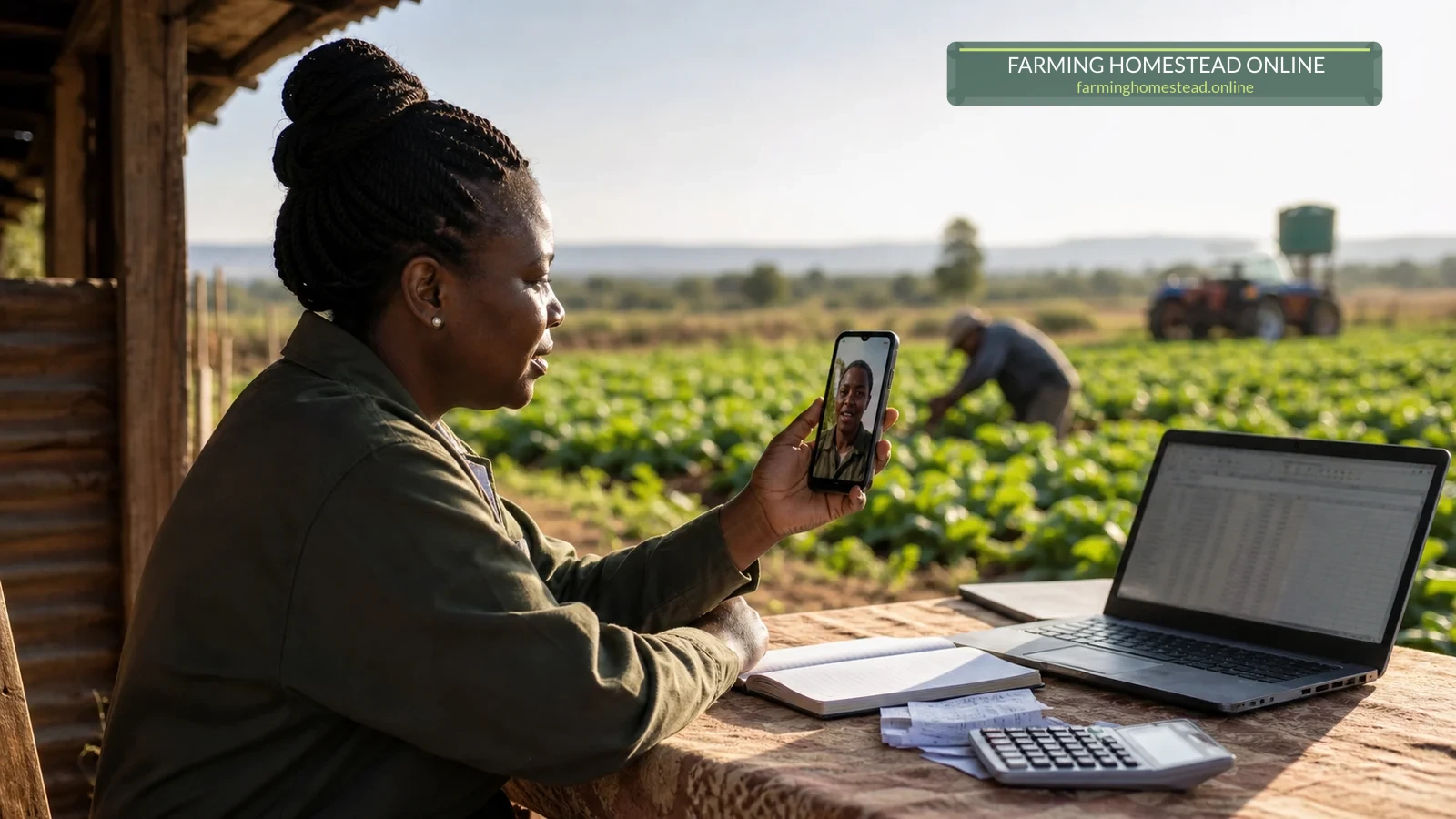
Prepared by the Farming Homestead Online editorial team. Sources and wording last checked on 2 September 2026. Use the guide for planning, then confirm current facts for your exact site.
Short answer: Distance does not have to destroy a farm project. Use one approved plan, fund one stage at a time, separate requests from approval and payment, demand proof of delivery, count stock, reconcile every sale and review a short weekly scorecard. Trust the people, then give everyone a system that makes good work easy to see.
You send money for fencing. Two weeks later, another amount is needed to finish the same fence.
You pay for feed. Nobody can tell you how many bags remain.
You hear that tomatoes were harvested, but there is no weight, buyer list or clear amount received.
Every phone call becomes an emergency. The farm looks busy. The owner abroad cannot tell whether it is moving forward.
This is why many people say diaspora farming does not work.
They are wrong.
Diaspora farming can work. What fails is funding activity without a control system.
Facebook has active Zimbabwe diaspora-farming groups and many businesses offering farm management, construction, tanks, tractors, troughs, sheds and other services. The visible conversation proves that the demand is real. What is often missing is the simple weekly method that connects the owner, manager, worker, supplier and buyer.
The answer is not to treat everybody as a thief. The answer is to make the work measurable.
Your farm worker is not the whole system
A reliable worker can feed, weed, irrigate, clean, guard and report. That person should not be expected to design the whole farm, choose every supplier, negotiate every buyer, approve their own purchases, hold all the cash and produce all the records.
Too much power and too much confusion in one role can damage a good relationship.
Give each role a clear job:
- Owner: approves the plan, budget, large purchases and major changes.
- Farm manager or lead worker: plans daily work, records production, checks staff and reports problems.
- Buyer or salesperson: confirms orders, deliveries, prices and payment.
- Supplier: provides a written quotation and delivery note.
- Independent checker: confirms important work, stock or construction at agreed stages.
On a small farm, one person may perform more than one role. The approval trail should still be visible.
Build one source of truth
Do not run the farm from hundreds of voice notes spread across family WhatsApp chats.
Create one shared folder and one simple farm workbook or Google Sheet. Use the same names for fields, houses, tanks, flocks, workers and projects. Store the approved layout, budget, quotations, delivery notes, weekly reports and sales records there.
WhatsApp remains useful for quick communication. The final decision and number should go into the shared record.
For example, a voice note says the pump needs repair. The manager then sends a short written request with the fault, photograph, quotation and effect on production. The owner approves or rejects in writing. The receipt and repair proof go into the folder.
Now the team can find the decision three months later.
The nine records that keep a remote farm under control
1. The whole-property plan
The plan shows where water, fields, livestock, housing, storage, roads, drainage, loading and future expansion belong.
Without it, every new payment can create a new problem. A chicken house blocks the future road. A tank is too low for the intended irrigation. The worker’s house is built where a loading area was needed. Pipes cross a future building.
The owner should approve the whole picture, then release only the current phase.
2. The stage budget
Never fund “the farm”. Fund a named stage.
A stage budget should show:
- exact work or production cycle;
- quantities;
- supplier quotation;
- labour;
- transport;
- contingency;
- start and finish date;
- person responsible;
- evidence required; and
- the condition for releasing the next payment.
For construction, use milestones. For example: setting out approved, foundations complete, wall level complete, roof complete, fittings tested. Do not release the entire build cost simply because materials are said to be expensive tomorrow.
For crops or livestock, fund the complete cycle to the next planned cash point. A cheap start that runs out of feed or fertiliser halfway is not cheap.
3. The purchase request
Every purchase begins with a short written request:
| Field | Example answer |
|---|---|
| Request number | FH-2026-041 |
| Item and quantity | 20 bags of named layer feed |
| Purpose | Week 9–10 feed for Flock L1 |
| Stock currently on hand | 3 sealed bags plus one open bag |
| Needed by | 7 September |
| Supplier and quotation | Attached |
| Requested by | Farm manager |
| Approved by | Owner |
The stock-on-hand line prevents repeated buying without a count. The purpose line connects money to production.
Set an amount below which the manager may buy routine items without waiting. Anything above it needs owner approval or two quotations.
4. Proof of delivery
A receipt proves that somebody paid. It does not prove that the correct goods reached the farm.
Delivery proof should include:
- supplier delivery note or receipt;
- item and quantity count;
- date and time received;
- photograph of goods at the named farm store or work area;
- batch, expiry or serial details where relevant;
- receiver’s name; and
- note of damage or shortage.
For building materials, photograph counted items with the current work in the background. For hidden work, such as pipe trenches or reinforcement, capture the evidence before it is covered.
Avoid one photograph of a pile sent for several different purchases. Give each delivery a request number.
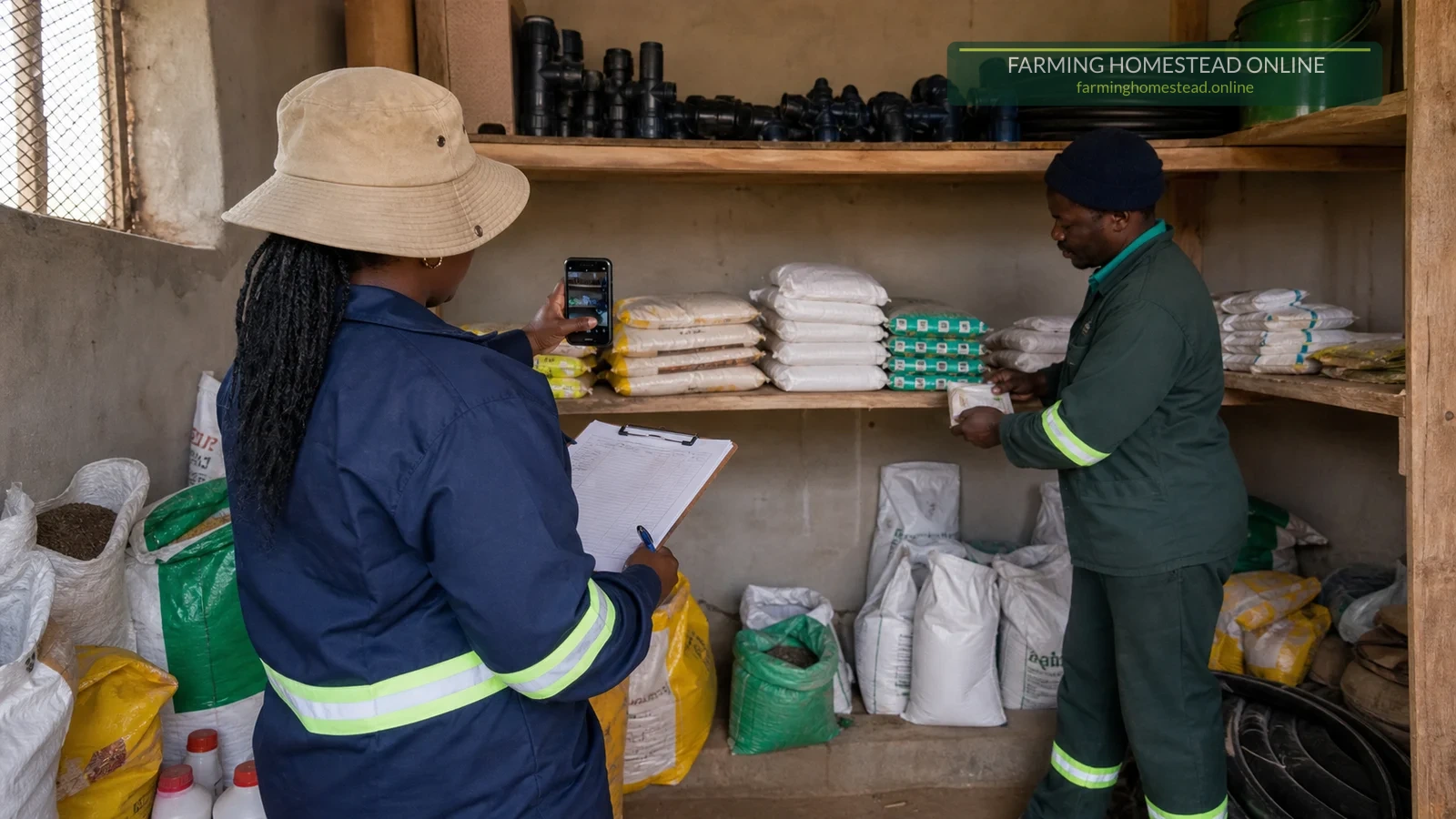
5. The stock book
Count inputs and products.
The stock book records:
- opening quantity;
- quantity received;
- quantity issued or sold;
- expected balance;
- physical count; and
- difference with an explanation.
Use it for feed, seed, fertiliser, chemicals, fuel, packaging, animal medicines, eggs, harvested bags, processed product and spare parts.
High-value items can be counted weekly. Fast-moving items may need a daily issue record. Slow items can be counted monthly.
The purpose is not paperwork. It is to see a leak while it is still small.
6. The production record
Every enterprise needs a few physical measures.
For crops, record planted area, planting date, input applications, irrigation, labour, pest or disease events, harvest date, kilograms and grade.
For poultry, record birds placed, deaths, feed used, sample weight or eggs collected, health work and birds sold.
For livestock, record animal identity, weight where practical, health work, breeding events, feed, deaths, purchases and sales.
For processing, record raw material in, product out, rejects, stock and machine downtime.
Pictures help, but numbers make pictures useful. “The crop is looking good” is encouraging. “Block B2 is 0.2 hectares, planted on 12 August, 94% established, irrigated four times this week and used 18 labour hours” can be managed.
7. The work-and-evidence report
Use a repeatable photo routine.
Take pictures from the same marked points each week. Put a small sign in the frame showing the block, date and project. For construction, include a tape measure or count where scale matters. For livestock, combine photographs with the physical count.
A good weekly evidence set may include:
- water meter, tank level or pump reading;
- wide view from each active production block;
- close view of any problem;
- input-store count;
- livestock or poultry count;
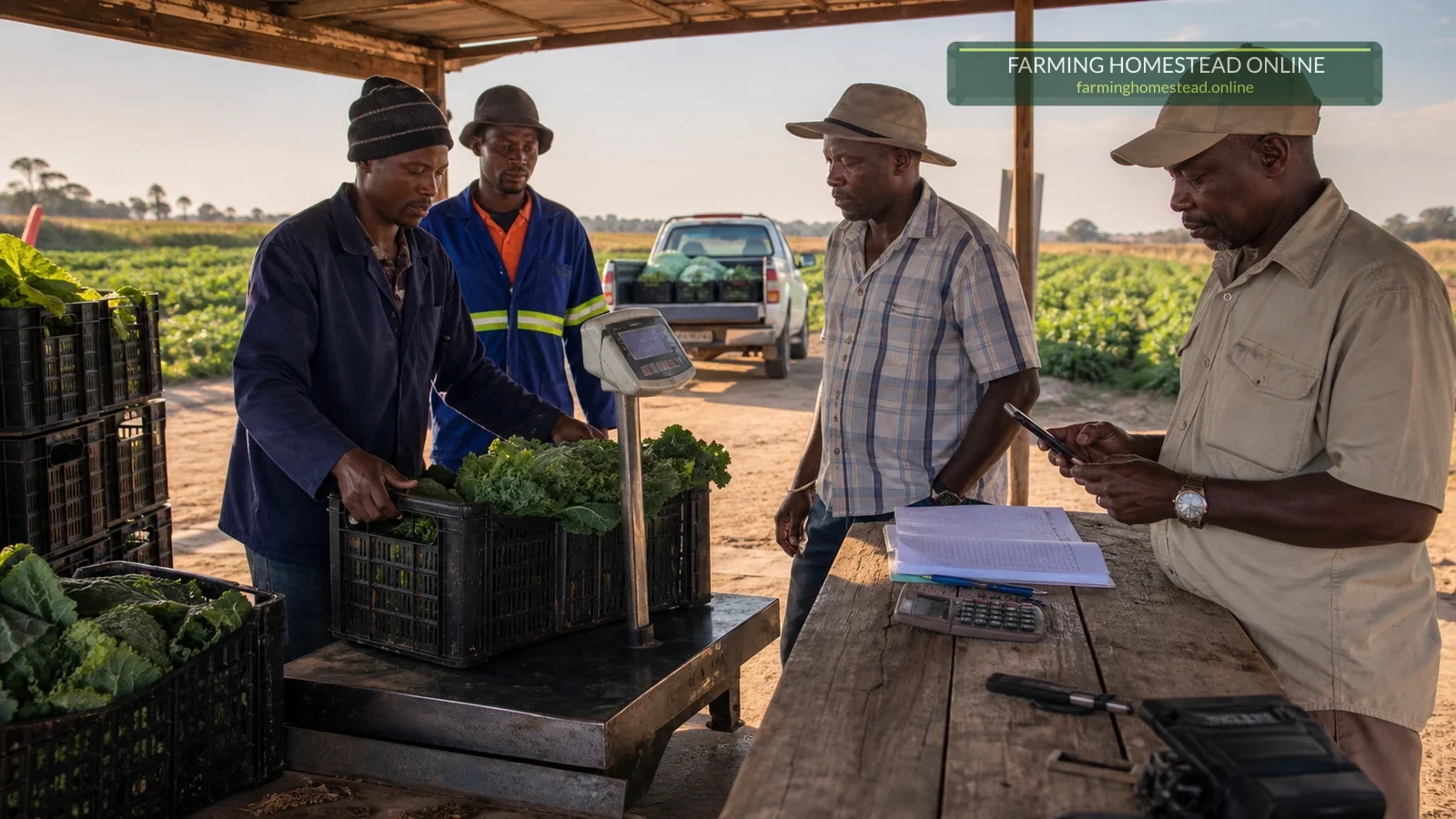
- harvest and grading area;
- deliveries made; and
- completed construction milestone.
Live video calls can confirm important work, but they should support records, not replace them.
8. The sales and cash record
Every harvest or product movement must end in a sales record.
Record:
- buyer;
- product, grade and quantity;
- agreed unit price;
- delivery or collection;
- invoice or receipt number;
- total sale;
- amount paid;
- payment method;
- balance due; and
- date received.
Compare product leaving the farm with cash received and customer balances.
If 100 trays of eggs leave, the system must show which customers received them, how much was paid and what remains due. If one tonne was harvested but only 800 kilograms were sold, record rejects, home use, worker allocation, storage and loss.
Do not allow farm sales to move through several personal wallets without a clear reconciliation. Use one agreed business account or wallet where possible and issue receipts.
9. The weekly scorecard
The owner should not need a three-hour call to understand the farm.
Use one page:
This week’s physical result
- crop area active and main field condition;
- livestock or bird numbers;
- kilograms, trays, animals or units produced;
- losses and reason;
- stock items below minimum level; and
- work completed against the plan.
This week’s money result
- opening cash;
- money received;
- money spent;
- customer balances;
- approved but unpaid purchases; and
- closing cash.
Next week’s decisions
- work planned;
- money needed;
- buyer commitments;
- risks requiring attention; and
- approvals required from the owner.
Colour only the exceptions: green is on plan, amber needs attention, red needs a decision now.
The weekly WhatsApp message that works
The manager can send this summary every Sunday:
Week ending: 6 September
Main result: 82 trays sold; 78 paid, 4 on approved credit
Production: 91 trays collected; 3 trays cracked or rejected
Feed: 12 bags opened, 9 sealed bags remain
Cash: US received; US spent; US closing
Work completed: repaired drinker line in House L1
Main risk: Buyer B reduced next week’s order
Decision needed: approve second buyer delivery route by Tuesday
Evidence folder: [shared link]
The exact measures change by enterprise. The short, repeatable structure should not.
Separate trust from verification
Verification is not an insult.
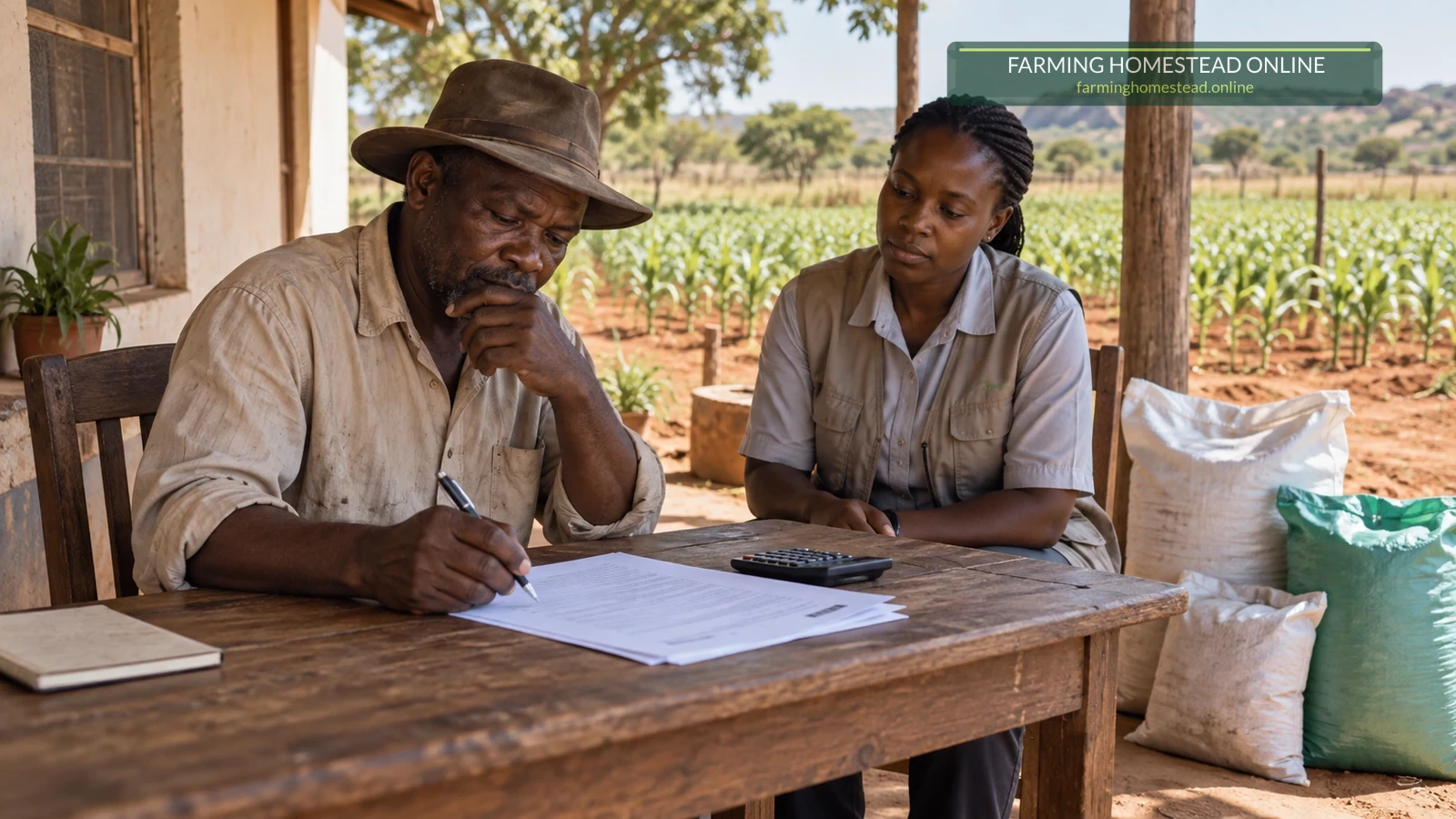
Good workers benefit from clear evidence because their work becomes visible. Good suppliers benefit because delivery disputes reduce. Owners benefit because they can approve faster. Managers benefit because they are not blamed for costs or decisions that were never recorded.
Use independent checks for:
- borehole tests;
- building stages before final payment;
- livestock purchases and sales;
- large input deliveries;
- physical stock at month end; and
- year-end asset counts.
The checker should report to the owner and should not be the person receiving the payment being checked.
Five warning signs to act on early
1. Every request is urgent
Real emergencies happen. Repeated emergency buying usually means weak planning, no stock minimums or no production calendar.
2. Photographs have no date, place or scale
Ask for repeat photo points, a project sign and numbers that match the picture.
3. The farm reports sales but cannot restart
Check feed, input replacement, customer credit, unrecorded withdrawals and whether turnover was mistaken for profit.
4. One person requests, buys, receives, pays and counts
Split at least one step. The owner can pay the supplier directly after approval, while the manager receives and an independent person checks large deliveries.
5. The project changes every month
New pigs, then tomatoes, then fish, then a greenhouse. Stop adding enterprises. Complete one planned unit, prove it and expand what works.
Pick projects that can be seen and measured
A remote owner should prefer clear production units, defined inputs, countable output and planned buyers.
That does not mean only simple projects can work. It means complex projects need stronger management.
For example:
- The Drought-Grain, Indigenous-Chicken and Milling Hub Project Pack separates fields, birds, storage and milling into measurable units.
- The Five-Cow Dairy, Fodder and Compost Homestead Project Pack connects animal records, feed production, milk handling and manure use.
- The Three-Hectare Avocado Fruit-Tree Project with Passion-Fruit and Cucumber Bridge Income separates long-term tree development from faster bridge-income blocks.
The right choice depends on water, distance, manager skill, market, working capital and how often a trusted independent person can visit.
Start with a Pack, then manage the Pack
A remote project is easier to control when the team is building from the same document.
Farming Homestead Project Packs provide the layout, quantities, buying logic, phases, calendar, operating flow, risks and records needed to turn general instructions into checkable work.
The public preview is free. The full Pack is US$10 through the current WhatsApp purchase process. Share the final Pack with the farm manager, name each phase and agree on the evidence before releasing money.
Compare all Farming Homestead Project Packs.
The positive way forward
You do not have to choose between blind trust and giving up on the farm.
Build a simple system. Keep one plan. Approve one stage. Pay against a clear request. Confirm the delivery. Count the stock. Measure production. Record the sale. Review the week.
When the numbers are clean, celebrate the team. When something is wrong, correct the process early.
The goal is not to watch every movement from another country. The goal is to make the important movements visible.
That is how diaspora farming becomes a business instead of a chain of emergency payments.
Frequently asked questions
Can I manage a farm in Zimbabwe while living abroad?
Yes, if the project fits the site and you have capable people, a clear plan, controlled money, regular physical records, buyer information and independent checks for important stages. Distance increases the need for a system.
Should I hire a farm manager or use a relative?
Choose for competence, availability, honesty and reporting ability, not only the relationship. A relative can be excellent and a paid manager can be poor, or the reverse. Give either person a written role, measures and review routine.
How often should I receive a report?
Receive a short weekly scorecard and urgent exception reports immediately. Review cash, stock and progress more deeply each month. Construction and high-risk production may need milestone reports more often.
Should I pay suppliers directly?
Direct payment can reduce cash handling for approved purchases. Still require a checked quotation, owner approval, delivery note and proof that the correct goods reached the farm.
What should I do when the numbers do not match?
Pause the next related payment, recount the physical stock, compare requests, receipts, deliveries, issues and sales, and ask for a written explanation. Correct the record or process before expanding the project.
Which farming project is easiest to manage remotely?
No project manages itself. Favour a project with measurable units, reliable water, a capable manager, regular buyers, clear input use and output that can be counted. Begin with one complete phase and prove the reporting system before adding complexity.

Join the farm conversation
Share what is working on your farm, ask a clear question or add a useful local experience.
Sign in to leave a reply
A free account keeps the discussion useful and places your name beside your reply.
Quickest option
After sign-up or sign-in, you will return to this article and this reply box.