
Prepared by the Farming Homestead Online editorial team. Sources and wording last checked on 20 September 2026. Use the guide for planning, then confirm current facts for your exact site.
Short answer: The contractor may recover the value of seed, fertiliser, chemicals, bags, transport, finance, insurance, administration or other agreed support from your crop payment. The contractor may also require you to deliver the contracted crop to them. Do not call the inputs free until the written contract says they are a grant with no recovery. Before signing, calculate what you could owe and what cash may remain after a weak harvest.
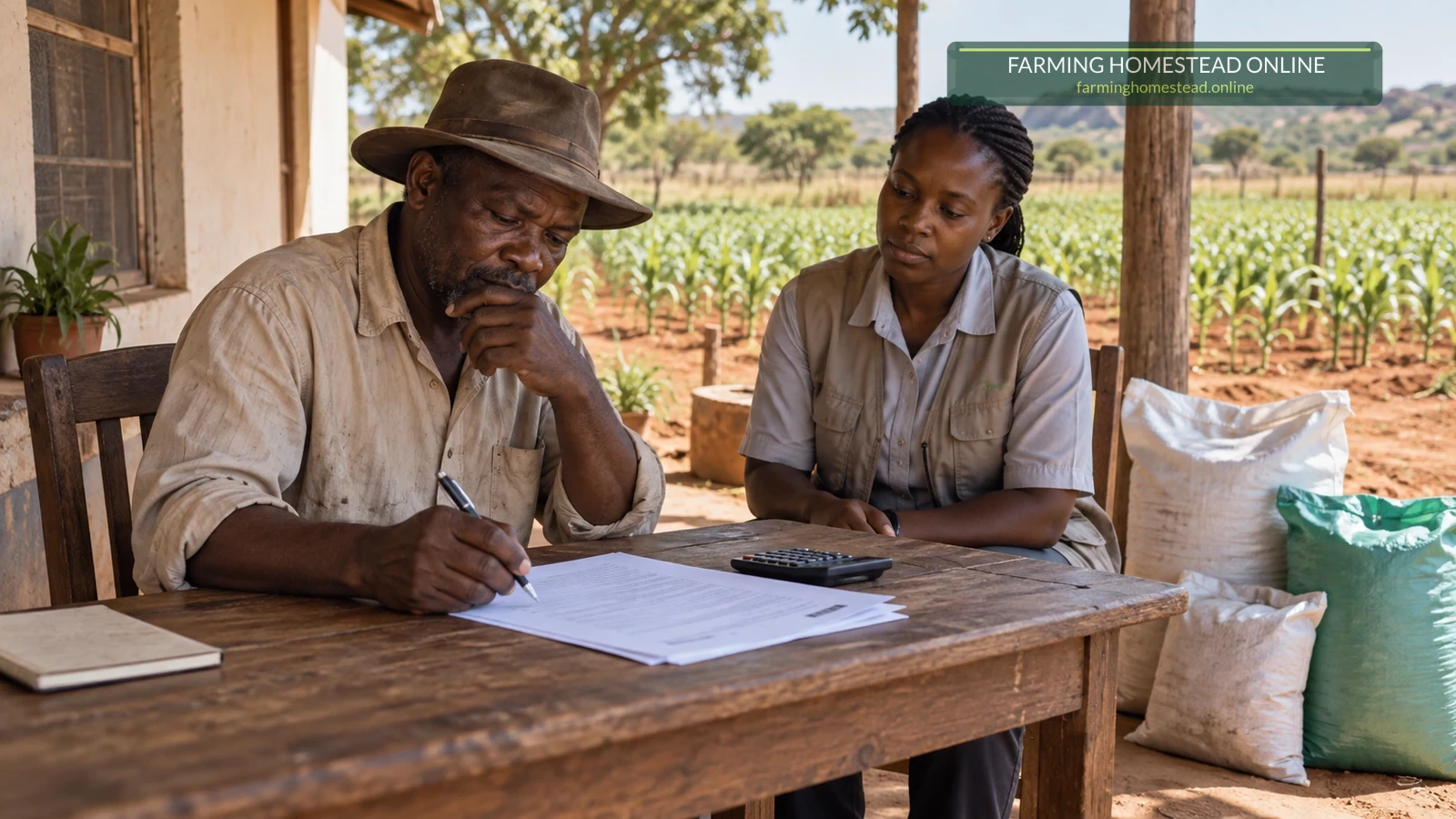
A truck arrives at the ward centre. Farmers receive seed, fertiliser and chemicals. The field officer explains that the company will buy the crop at the end of the season.
It sounds simple. The contractor helps you plant. You repay after harvest.
The difficult part is hidden between those two events. What value has been put against each input? Does interest apply? Which crop must be delivered? How will the buying price be set? What happens if the season is poor? Can transport, grading or bags be deducted? When will the balance be paid?
These questions matter more in the 2026/27 season because the official seasonal outlook warns about erratic rain and the possibility of an ineffective onset. A recoverable-input scheme can still help a farmer who lacks planting cash. It can also leave the farmer with little or no payment if the crop is weak and the deductions are not understood.
The Agricultural Marketing Authority regulates agricultural marketing and provides registration routes for contractors, buyers and other market participants. The official cotton framework also regulates contract production, marketing, classification and quality. Registration is one check. It does not replace reading your own contract.
“Inputs supplied” and “inputs free” are different statements
Ask the contractor to classify every item in writing.
An item can be:
- a grant that will not be recovered;
- a loan that will be deducted from crop proceeds;
- stock supplied on credit at a stated price;
- a service charged after delivery;
- equipment that remains the contractor’s property;
- an item that must be returned if unused; or
- a subsidy with conditions attached.
Do not rely on the colour of the programme, the name of the scheme or a verbal announcement. Use the signed contract and the delivery note for your farm.
A farmer who receives ten bags must also know whether the contractor records ten bags against the account. Count the goods. Check seals and damage. Write the batch, quantity and stated value on the day of receipt. Keep your copy of the delivery note.
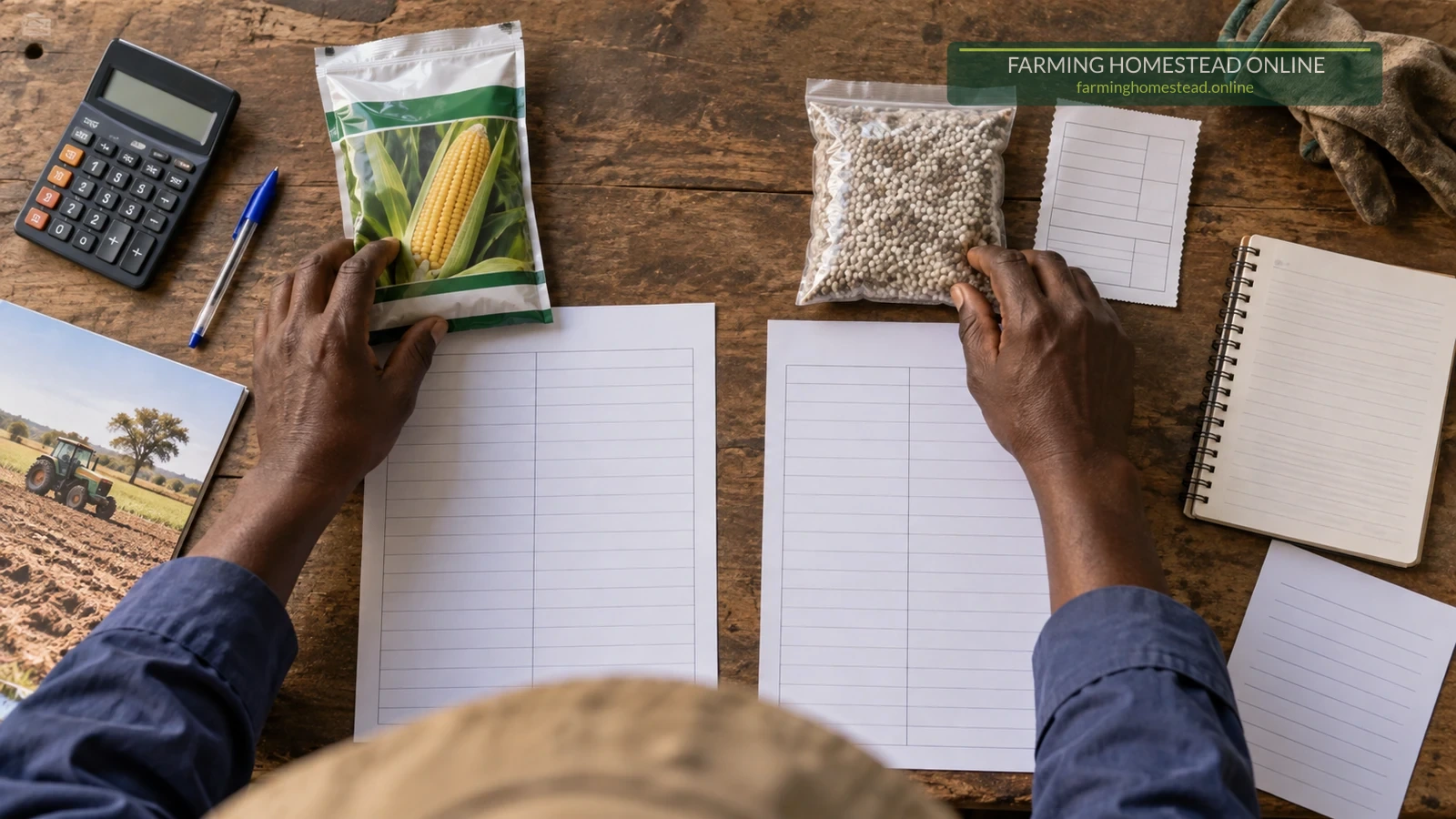
Build one debt table before you sign
Use one line for each item. Do not accept a single total called “input package” if the contractor can provide the detail.
| Item or service | Quantity | Unit value | Total value | Recoverable? | When deducted? | Evidence |
|---|---|---|---|---|---|---|
| Seed | Yes / No | Delivery note | ||||
| Basal fertiliser | Yes / No | Delivery note | ||||
| Top-dressing fertiliser | Yes / No | Delivery note | ||||
| Crop-protection inputs | Yes / No | Delivery note and label | ||||
| Bags or packing | Yes / No | Contract | ||||
| Transport | Yes / No | Contract or invoice | ||||
| Insurance | Yes / No | Policy and contract | ||||
| Interest or finance fee | Yes / No | Contract | ||||
| Administration or levy | Yes / No | Contract and legal basis |
Add a second table for costs that the contractor does not cover: land preparation, planting labour, weeding, scouting, spraying labour, water, protective clothing, repeated picking, food for workers, transport to the collection point and the farmer’s own time.
The contract can look generous while the farmer still carries most of the cash cost.
Ask what crop the contractor takes back
Some contracts require the farmer to sell the contracted crop to the contractor. That can be reasonable when the contractor financed the crop and follows the law. It becomes dangerous when the farmer did not understand the obligation or the buyer’s price and grading rules were left open.
Write down:
- the exact crop and variety;
- the measured contracted area;
- the expected delivery point;
- whether all crop from that area must be delivered;
- the grade or quality system;
- how the price will be announced or calculated;
- whether the contractor can reject crop;
- which deductions can be made;
- when payment becomes due; and
- the lawful dispute route.
Do not accept a blank space that will be filled later. Do not sign a contract that gives one party unlimited power to add fees, change the delivery point or value inputs after you have planted.
Side-marketing can breach a valid contract. At the same time, the contractor must not hide terms or invent deductions after delivery. The safe route is to resolve the obligations before planting, not when a truck is waiting for your crop.
Record the full value when inputs arrive
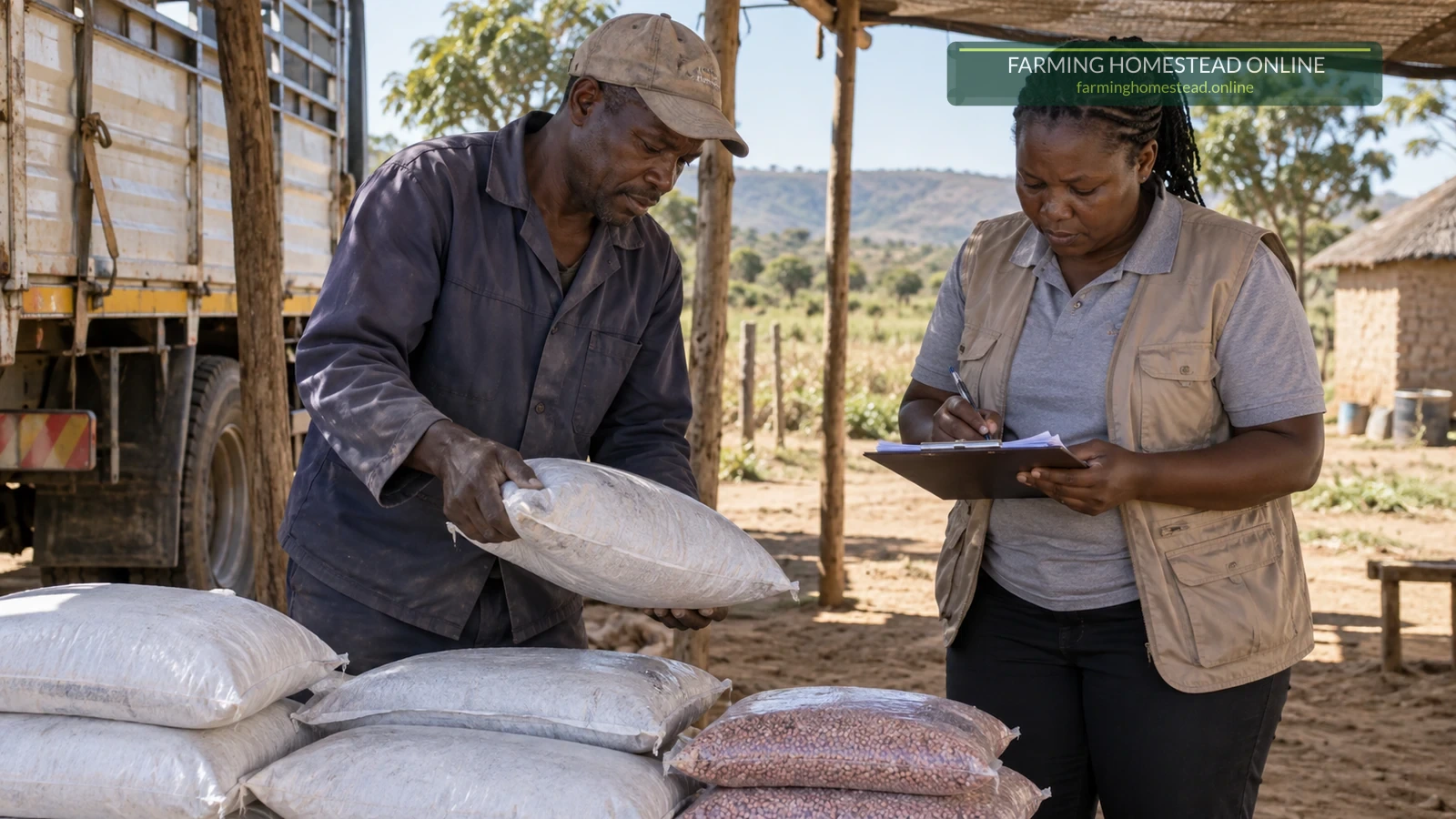
At receipt, check:
- contractor and farmer names;
- contract or grower number;
- crop and measured area;
- product name and registration where applicable;
- seed variety, batch and pack size;
- fertiliser formulation and bag weight;
- chemical seal, label, expiry and damage;
- quantity accepted and quantity refused;
- unit value and total value;
- date, location and issuing officer; and
- both signatures and your copy.
Do not take an unlabelled chemical. Do not pour a product into another container. Do not sign for a missing bag because someone promises to bring it later. Record the missing item as missing.
Store chemicals separately from food, seed, harvested crop and living areas. Use the current registered label, correct protective clothing and a calibrated sprayer. A contract does not make an unsafe product or an old spray instruction acceptable.
Test the contract against a weak harvest
A good contract should be understandable under three cases: weak, expected and stronger.
Here is a fictional example. It is not a current cotton price or a quotation.
A farmer plants 1.5 hectares. The contract records US$650 of recoverable inputs. The farmer spends another US$1,100 on land work, weeding, safe spraying, repeated picking, bags, food and transport. The farmer delivers 1,350 kg. The planning price is US$0.40/kg and 8% is lost through lower grade or rejection.
Gross accepted value:
1,350 kg × US$0.40 × 92% = US$496.80
If the contractor deducts US$650, the crop payment is already below zero before the farmer’s US$1,100 cash cost. The figures are only an example, but the lesson is real: an input package cannot make an uneconomic yield, price and cost combination profitable.
Now change the yield, price, grade loss and deductions. Ask what combination is needed before the farmer receives a useful cash balance. If the answer requires a perfect season or an unconfirmed high price, reduce the area or refuse the contract.
Our Two-Hectare First-Season Cotton Contract, Picking and Graded-Delivery Project Pack keeps contractor inputs at their full economic value and tests the final delivery after labour, grade loss and deductions.
Separate agronomy support from commercial control
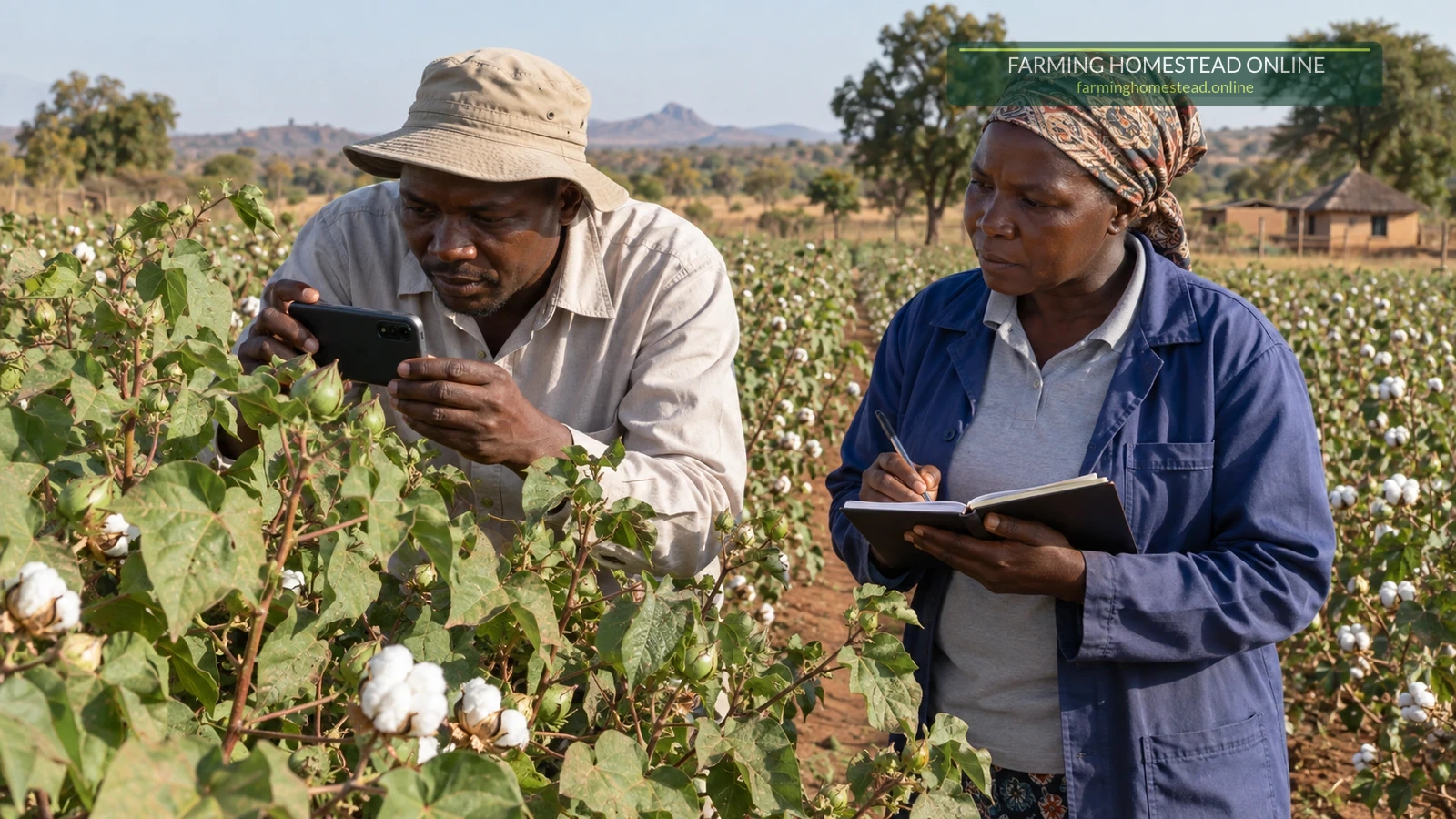
A contractor field officer may provide important advice. Keep that advice in the crop record. Also know which decisions need an independent agronomist, official extension worker, regulator or laboratory.
For crop-protection work, record the observed problem, field, date, product, current label instruction, calibration, operator, weather, protective clothing, re-entry interval and pre-harvest interval. Do not turn a contract input list into an automatic spray calendar.
If a crop fails, collect evidence early:
- rainfall and planting dates;
- seed and input batches;
- field photographs from fixed points;
- stand counts;
- scouting and treatment records;
- field-officer visits and written instructions; and
- any report required by the contract or insurer.
The evidence may not remove the debt. It can show what happened and whether the contract’s crop-failure clause applies.
Reconcile the account before the crop leaves
Before delivery, request a provisional statement. It should show the opening input debt, returned or unused inputs, approved credits, interest or fees, other permitted deductions and the balance before the harvest is weighed.
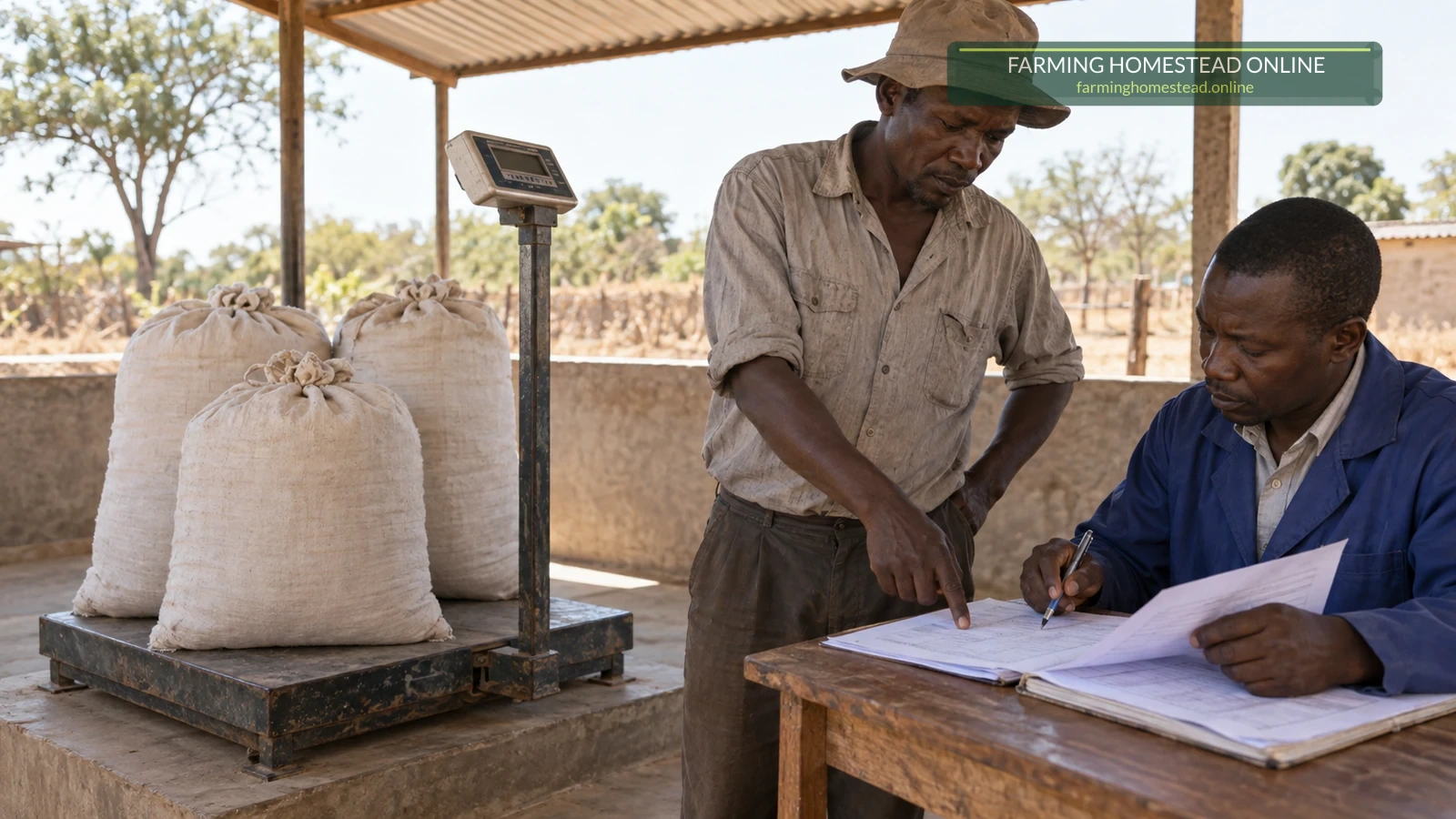
At delivery, record:
- number of bags or packs;
- truck and driver;
- gross, tare and net weight;
- grade and rejection result;
- price per unit and price-setting basis;
- every deduction with its reason;
- net amount payable;
- payment method and date; and
- the person who received the crop.
Do not surrender your only copy. Photograph or copy every signed document. If the buyer changes a bank account, collection point or payment method, verify the change using an official contact you obtained independently.
Twelve questions to ask before signing
- What is the contractor’s legal name and current AMA registration?
- Who is the responsible officer and where is the physical office?
- What exact area and crop does this contract cover?
- Which items are free, recoverable, returnable or contractor-owned?
- What unit value is recorded for every input and service?
- Is there interest, insurance, administration, transport or another fee?
- Must all crop be delivered to the contractor?
- How will grade and price be decided?
- Which deductions are permitted and when will I see the statement?
- What happens after drought, flood, crop failure or a rejected delivery?
- When and how will the remaining money be paid?
- Which authority or process handles a dispute?
Ask for the answers in writing. A field-day speech and a WhatsApp voice note are not the contract.
Red flags that should stop the deal
Stop when:
- the contractor cannot be verified independently;
- the contract has blank commercial fields;
- the farmer is rushed to sign at input collection;
- supplied quantities or values do not match the delivery note;
- fees can be added without a clear rule;
- the buying price and grade system have no defined method;
- crop-failure responsibility is hidden;
- the company asks the farmer to surrender original identity or land documents;
- cash must be paid to a personal account without a proper invoice; or
- the contractor refuses to give the farmer a signed copy.
Frequently asked questions
Are contract inputs always a loan?
No. They can be a grant, subsidy, credit package, recoverable scheme or a mix. The signed terms and delivery records must identify which applies.
Can the contractor take my whole crop?
A valid contract may require delivery of the crop grown under that contract. The scope, buying obligation, grade, price and deductions should be clear before planting. Get current AMA or legal guidance when the clause is unclear.
What if the crop value is less than the input debt?
The contract should say what happens to the unpaid balance after a poor season. Do not assume it disappears. Test that risk before signing.
Can I sell elsewhere if another buyer pays more?
Do not side-market crop covered by a valid buying obligation. Read the contract and use the lawful dispute route if the contractor breaches its obligations.
Where can I verify the contractor?
Start with the Agricultural Marketing Authority’s application and registration routes and contact AMA independently. A logo, Facebook page or copy of a blank form is not proof of a current certificate.
The decision
A contract can solve a real problem. It can provide inputs, technical support and a buyer when the farmer cannot finance the crop alone.
It is still a business agreement.
Write the input value. Add your own cash costs. Test a weak harvest. Understand the buying obligation. Keep the crop and debt records. Witness the delivery. Confirm actual payment.
Accept the inputs only when the complete route leaves a risk you understand and can carry.
Next step: Before collecting any contract input, make the debt table above and take the unsigned contract to AMA, your extension officer or an independent adviser for the questions that remain open.
Sources and useful checks
- Agricultural Marketing Authority application forms
- Agricultural Marketing Authority statutory instruments
- 2026 First Round Crops, Livestock and Fisheries Assessment
- Cotton Company of Zimbabwe description of its contract-input and buying route
- Meteorological Services Department 2026/27 seasonal outlook
This Guide is general planning information. It is not legal advice, a current contract approval or a promise that a crop will repay its inputs.
Join the farm conversation
Share what is working on your farm, ask a clear question or add a useful local experience.
Sign in to leave a reply
A free account keeps the discussion useful and places your name beside your reply.
Quickest option
After sign-up or sign-in, you will return to this article and this reply box.