
Prepared by the Farming Homestead Online editorial team. Sources and wording last checked on 2 September 2026. Use the guide for planning, then confirm current facts for your exact site.
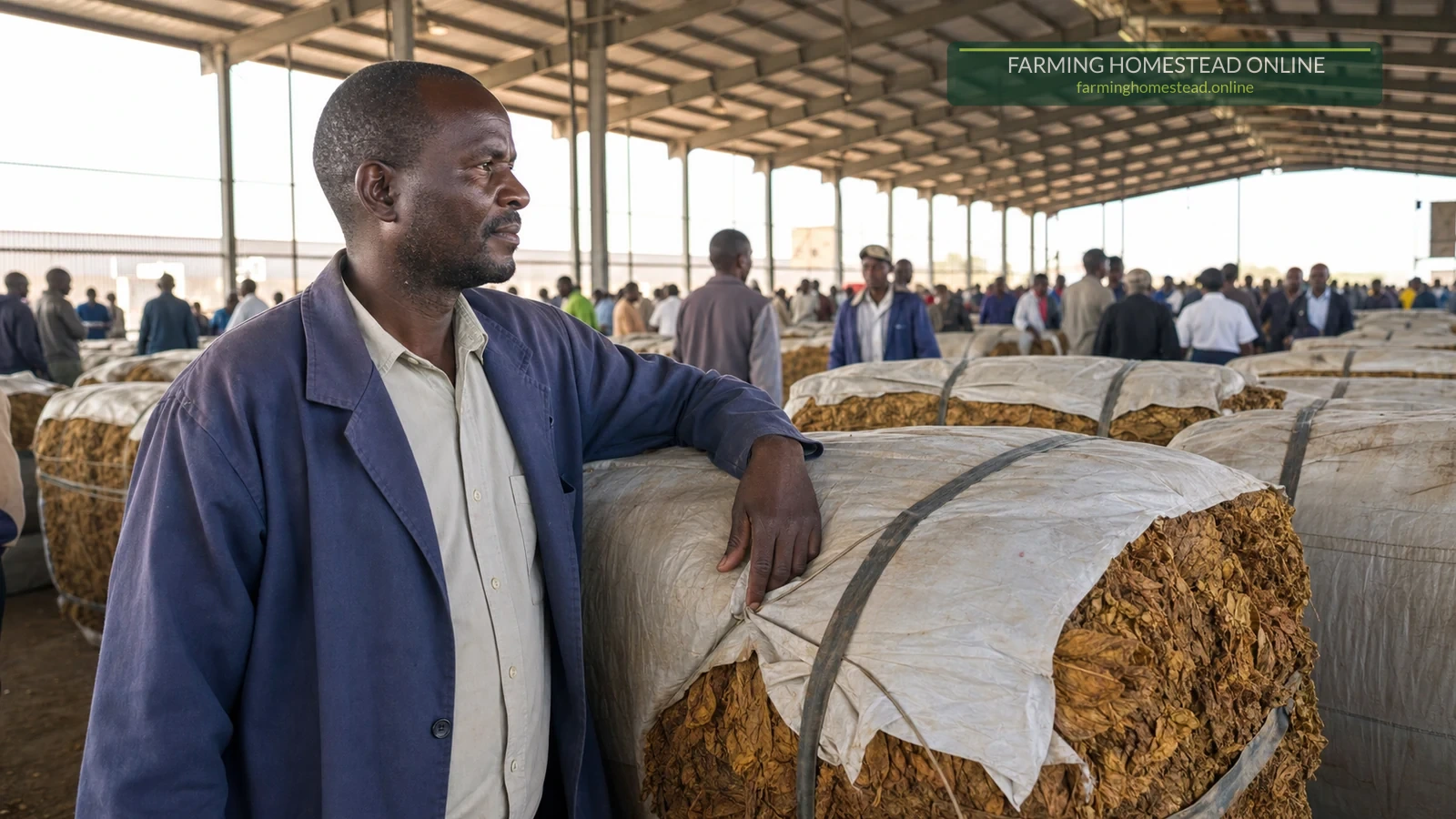
Short answer: Zimbabwe grew and sold more tobacco than ever in 2026. Yet the average price fell from about US$3.32 per kilogram in 2025 to US$2.49. Auction growers were hit even harder. This is the story hidden behind the record crop: strong production, weaker quality indicators, painful prices, heavy deductions and a payment system that can punish a farmer who reaches the floor without the right account, grower number and records.
There were two very different tobacco seasons in Zimbabwe in 2026.
The first season was the one in the national headlines. Farmers delivered more than 357 million kilograms. That was the biggest tobacco crop Zimbabwe had ever marketed. It was slightly bigger than the previous record of 354.8 million kilograms sold in 2025. The country could say, for the second year in a row, that it had broken its own production record.
The second season was the one many farmers experienced in their own pockets.
It began with complaints and protests over low prices. It continued with the national average falling to about US$2.49 per kilogram, against US$3.32 in 2025. At the auction floors, the difference was more severe. By late July 2026, auction tobacco was averaging about US$1.91 per kilogram, while contract tobacco was averaging about US$2.55. Farmers also faced loan recovery, floor charges, transport, packaging, labour, curing fuel and the rule that 30 percent of their payment would come in ZiG.
So was 2026 a good tobacco year or a bad one for Zimbabwe’s small-scale farmer?
The honest answer is this: it was a very good production year, but a bad selling year for a large number of small-scale growers. Farmers proved that they could grow volume. The market did not reward that volume at the same rate as the year before. Good growers with strong yields, clean leaf, efficient barns and manageable debt could still make money. But the margin for error became dangerously thin, especially for an independent farmer selling at auction or a contracted grower whose crop first had to clear an expensive input account.
That difference matters. A national sales total is not a farmer’s profit. A high first-bale price is not the price that the average farmer will receive. A full sales sheet is not the same as money left in the farmer’s bank account.
This is the rude awakening from the 2026 season.
First, correct the dates: the market did not open in April
Zimbabwe’s 2026 auction tobacco marketing season opened on Wednesday 4 March 2026. Contract sales started on Thursday 5 March 2026. April was already the second month of selling, not the beginning.
This small correction is important because the market changed as the season moved forward. The first days were dominated by opening publicity, early deliveries and lower leaf positions. Prices appeared to improve after more buyers entered the market. By April, however, a clearer pattern had formed: Zimbabwe was delivering much more tobacco than in 2025, while the average price remained sharply lower.
The official 2026 sales procedures published by the Zimbabwe Tobacco Association also confirmed the two routes to market. A self-financed grower had to sell through a licensed auction floor. A contracted grower had to deliver to the contractor who financed the crop. Biometric registration became a condition for registration, booking, delivery, sale and payment.
In other words, arriving with tobacco was no longer enough. The farmer, the crop, the grower number, the contract, the booking, the biometric record and the bank details all had to match.
The headline comparison: 2025 brought the money; 2026 brought the kilograms
The 2025 marketing season was an exceptional national result. Final TIMB figures recorded 354,881,661 kilograms sold at an average of about US$3.32 per kilogram, with a total gross value of about US$1.178 billion. There were 135,284 tobacco-producing households. Cabinet later described it as the first time growers had earned a combined US$1.2 billion from the crop.
The 2026 season then edged past that record volume. More than 357 million kilograms had been delivered by the close of the season and mop-up sales in August. But the average price had fallen to about US$2.49 per kilogram. Near the end of July, 356.2 million kilograms were worth approximately US$887.9 million.
Put those two results next to each other:
| Measure | 2025 season | 2026 season | What it meant |
|---|---|---|---|
| Tobacco marketed | 354.9 million kg | More than 357 million kg | Another production record |
| National average price | About US$3.32/kg | About US$2.49/kg | Roughly 25% less per kg |
| Gross grower value | About US$1.178 billion | Roughly US$889 million at the closing volume | About US$289 million less despite more tobacco |
| Auction average | About US$3.55/kg in 2025 closing data | About US$1.91/kg by late July 2026 | The harshest price shock |
| Contract average | About US$3.31/kg in 2025 closing data | About US$2.55/kg by late July 2026 | Better than auction, but still sharply down |
| Rejection rate | About 3.02% near season close | About 4.35% | More bales rejected; quality and presentation were weaker overall |
The cleanest like-for-like snapshot came on selling day 95. Zimbabwe had sold 354.10 million kilograms in 2026, 6.37 million kilograms more than at the same stage in 2025. Yet the value was about US$883.14 million, compared with about US$1.16 billion a year earlier. That is approximately US$274.5 million less from more tobacco. The day-95 market analysis also recorded the increase in the rejection rate.
This is why the record-volume headline cannot answer the small farmer’s question. The country’s scale went up. The money paid per kilogram went down. The grower still had to carry almost all the work and most of the production risk.
What the same two tonnes could have earned
Take a simple example of a farmer who sold 2,000 kilograms in both years. This is only a gross-sales comparison. It does not yet subtract inputs, labour, fuel, transport, levies, floor charges or debt.
At the national average:
- In 2025, 2,000kg × US$3.32 produced gross sales of US$6,640.
- In 2026, 2,000kg × US$2.49 produced gross sales of US$4,980.
- The same physical output lost US$1,660 in gross value.
For an auction grower, using the reported closing averages:
- In 2025, 2,000kg × US$3.55 produced US$7,100.
- In 2026, 2,000kg × US$1.91 produced US$3,820.
- That is a gross-income fall of US$3,280 on the same two tonnes.
For a contract grower:
- In 2025, 2,000kg × US$3.31 produced US$6,620.
- In 2026, 2,000kg × US$2.55 produced US$5,100.
- That is a gross-income fall of US$1,520 before the contractor recovered the farmer’s loan and before the farmer paid the costs not included in the input package.
No two farmers have exactly the same grades or costs, so these are not individual profit statements. They show the size of the price shock. A grower who kept the same yield and quality could work just as hard and still begin the calculation US$1,500 to US$3,000 behind the previous year.
That gap is the difference between paying workers and owing them, buying fertiliser early and waiting for a contractor, repairing a barn and patching it again, or sending children back to school and asking for more time.
Was the 2026 crop poor quality?

The word “quality” was used throughout the season, but it was often used too loosely.
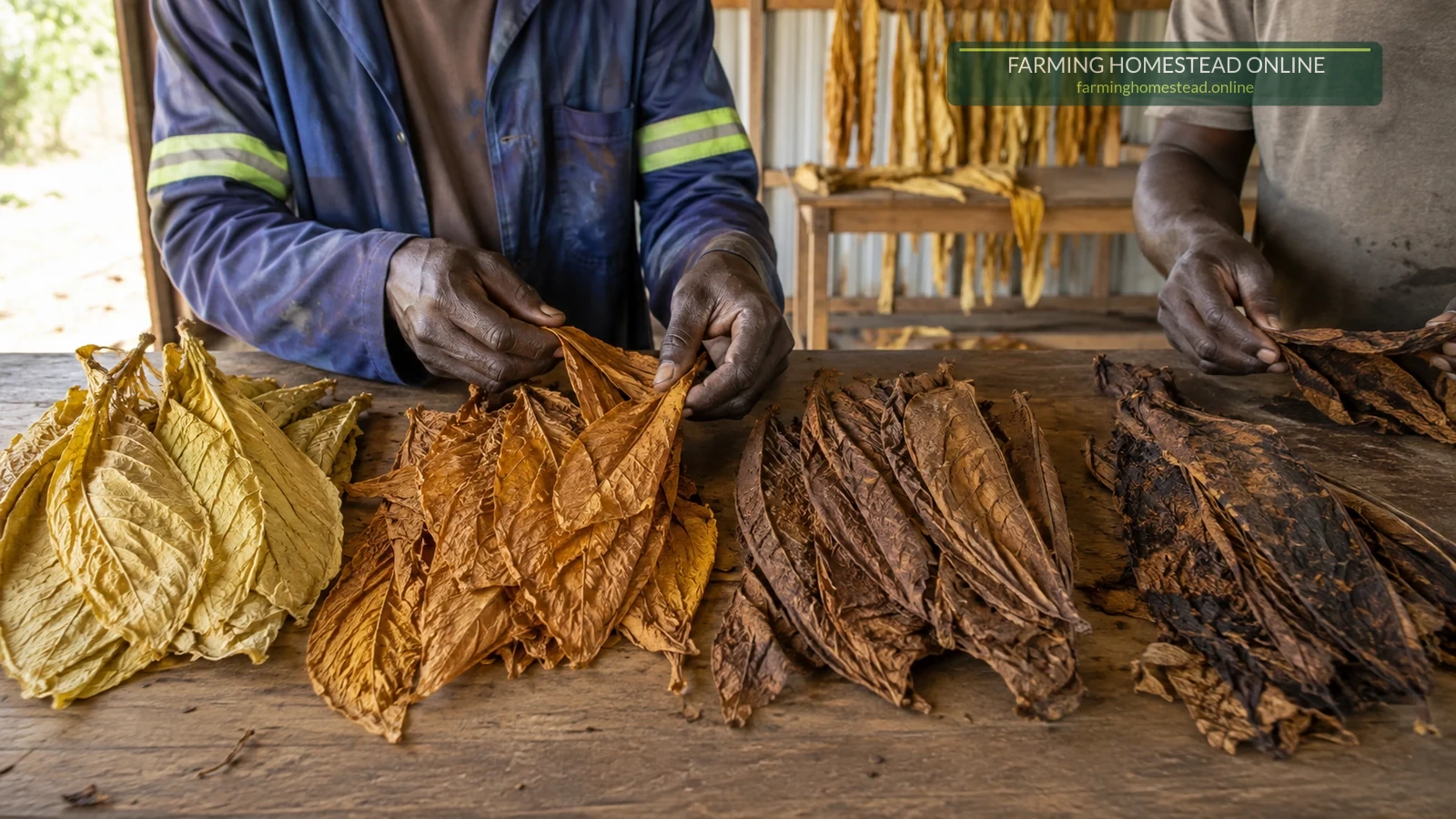
The 2026 crop was not all poor. Zimbabwe continued to produce premium lemon and orange tobacco that attracted strong prices. Experienced farmers with correct fertiliser timing, good topping and suckering, clean reaping, controlled curing and disciplined grading still produced desirable leaf. Buyers continued to pay a premium for the styles they needed.
But the season’s total figures show that overall quality and presentation were weaker than in 2025.
Near the end of the season, the national rejection rate had risen from about 3.02 percent to 4.35 percent. That is not a tiny movement. It is an increase of roughly 44 percent in the rejection rate. By mid-April, more than half of the crop being delivered was reported to fall into the third to fifth quality groups, much of it selling below US$2.20 per kilogram. Early sales also contained a large volume of primings—the lower leaves that naturally tend to attract less money.
The 2025 crop had a different reputation. The growing season after the 2024 drought was more favourable, and industry reports described overall quality as satisfactory. By the end of that marketing season, auction tobacco averaged about US$3.55 per kilogram, even higher than the contract average of about US$3.31. The highest reported auction price was US$4.99, while top contract tobacco reached US$6.30. Small-scale farmers were also credited with improving their grading.
So quality contributed to the 2026 pain, especially for low and middle grades. But it does not explain the entire fall.
This is the point farmers kept making. A leaf can be weaker than premium and still cost a great deal to produce. A low grade does not mean the farmer used no fertiliser, no labour, no curing fuel and no transport. When lower and middle grades are heavily discounted, the grower’s costs do not fall with the price.
The market also became much more selective because the world had plenty of tobacco. When buyers have too much supply, they can reject imperfections that they might have accepted in a tighter year. They can reserve strong bids for exactly the colour, body, position and style they need. The same bale can therefore meet a much colder market even when the farmer’s method has not changed greatly.
The correct verdict is: 2026 had a mixed crop, a worse rejection rate and too much lower-grade leaf, but the price collapse was also a market problem. Blaming every low price on the farmer’s quality would ignore the clear effect of oversupply, carry-over stock and weak competition at the opening of the season.
Why the price fell so hard
There were four main pressures.
1. Zimbabwe produced into an oversupplied world market
Zimbabwe expected a crop of up to 400 million kilograms. Other major producing countries also had strong crops, while buyers were still carrying stock from the previous season. Cabinet said world tobacco production was expected to reach 6.5 billion kilograms in 2026, including more than 2.3 billion kilograms from China.
More tobacco was chasing limited orders. That gives the buyer more choice and weakens the farmer’s bargaining position.
2. The 2025 record crop did not disappear before the 2026 crop arrived
A record harvest is only good when the market absorbs it. The 2025 crop filled the supply chain. Some merchants and international customers carried stock into 2026. Zimbabwe then planted more and delivered another record.
The production system responded faster than demand. Seed, contracts, land and farmers expanded the supply. New export markets and local processing did not expand at the same speed.
3. Buyer competition was weak at the beginning
Farmers protested at the opening as some ordinary bales attracted shockingly low bids. On 6 March, TIMB said prices were “beginning to stabilise” as more buyers participated. That official message confirms the underlying problem: competition was not strong enough at the start.
The market did improve from the opening shock, but it never recovered to the 2025 level. By March 18, Cabinet reported a combined average of US$2.66 per kilogram, 24 percent below the comparative 2025 price. Contract tobacco averaged US$2.72 against US$3.53 the previous year. Auction tobacco averaged just US$1.77 against US$3.03. The March Cabinet update openly recognised the challenge.
4. Low and middle grades were hit hardest
In an oversupplied market, buyers do not need to compete hard for ordinary tobacco. Premium leaf can still find a premium home. Lower leaf positions, stained tobacco, thin styles, mixed grades, over-conditioned bales and tobacco carrying fuel smell become much harder to sell well.
That is why the first bale created false hope.
The first bale sold for US$4.60 per kilogram, only five cents below the US$4.65 opening price in 2025. But a ceremonial first bale is specially selected. It is not the average bale and it is not a promise to every farmer. The final 2026 national average was roughly US$2.11 below that first-bale price. At the auction floors, the gap was even wider.
The first bale did not show where the market would settle. It showed what one excellent bale could attract on opening day.
The contract saved production—but it did not guarantee profit

Zimbabwe’s small-scale tobacco boom was built on contract farming. A contractor can provide seed, fertiliser, chemicals, agronomy, cash for labour, curing fuel and a guaranteed route to market. That support matters because most small farmers cannot obtain a normal bank loan against land they cannot use as acceptable collateral.
Without the contract system, Zimbabwe would not have reached the volumes it sells today.
But the same system can leave the grower dangerously dependent on the company that financed the crop and buys it.
By late July 2026, contract sales accounted for roughly 324 million kilograms out of 354.4 million kilograms sold. That was more than 91 percent of the crop at that point. The contract average of US$2.55 was much better than the auction average of US$1.91, but it remained well below the previous year.
The 2026 selling rules said contractors had to purchase enough tobacco to cover the farmer’s verified debt and could not buy crop they did not finance. Stop orders had to be lodged electronically before the sale. Contract prices were meant to be checked against auction and weighted market prices. These controls were intended to protect the farmer and the integrity of loan recovery.
The farmer’s problem is what happens after the gross sale is divided.
Suppose a contracted grower’s 2,000 kilograms gross US$5,100 at the 2026 contract average. That figure is not cash in hand. The contractor first recovers the verified foreign-currency debt. Then come any other permitted deductions and charges. The farmer also has expenses that the contract may not have financed fully: family labour, hired workers, extra chemicals, reaping, tying, grading, food for workers, repairs, transport within the farm, water, electricity, fuel and the farmer’s own time.
A farmer can therefore produce a crop with a sale value of several thousand dollars and still receive a disappointing balance. If the yield is low or too much tobacco falls into cheap grades, the crop can struggle to clear the debt at all.
The contract is not free inputs. It is a loan tied to a buyer.
This was one of the strongest themes in the Facebook discussion. Farmers did not only say, “the price is low.” They said that after the company, the floor, the bank, the transporter and other charges took their portions, the farmer was left with too little. Others argued that a contractor could buy enough crop to recover its facility and leave the balance exposed to a weak auction market.
Some of those statements were allegations made in public discussion, not audited farm accounts. But the basic concern is financially sound: the farmer must judge the contract by the net cash left after every recovery, not by the value of the input pack or the highest price on the floor.
The auction farmer took the hardest hit
Auction tobacco is often associated with independence. The farmer finances the crop and sells it to the highest bidder on the floor. In a strong market, that freedom can produce a good result. In 2025, the auction average ended above the contract average.
In 2026, independence became exposure.
By day 96, auction growers had sold about 30.4 million kilograms at an average of roughly US$1.91 per kilogram. Contract growers were receiving about US$2.55. The auction farmer therefore earned about 64 cents less per kilogram than the contract grower, before other differences in crop quality and services.
At 2,000 kilograms, that 64-cent gap equals US$1,280.
The self-financed grower had already paid cash for the inputs and taken the full production risk. If that farmer borrowed informally, sold livestock, used remittance money or delayed other household needs to fund the crop, an average of US$1.91 could be devastating.
This does not mean auction is always bad or contract is always good. It means route-to-market risk changed sharply between the two seasons. The independent farmer must now budget against a bad-market price, not the best price from the previous season.
The cost nobody sees in the national total
Tobacco is not a plant-and-wait crop. It is one of the most demanding crops a small-scale farmer can choose.
The work starts with the seedbed, often months before the main field is planted. The farmer prepares land, raises seedlings, waters and protects them, transplants, gaps, fertilises, controls pests and disease, tops, removes suckers, reaps leaf in stages, carries it to the barn, cures it through closely controlled heat, conditions it, grades it, packs it and transports it to market.
The major costs can include:
- seed and seedbed materials;
- basal and top-dressing fertiliser;
- chemicals and protective clothing;
- land preparation and diesel;
- seedbed and field water;
- hired labour over many months;
- reaping, tying and barn loading;
- firewood, coal, electricity or another curing fuel;
- barn repairs and temperature-control losses;
- grading labour;
- hessian, paper, twine and bale preparation;
- transport to a decentralised point or Harare floor;
- floor handling, weighing and other charges;
- statutory levies;
- bank and withdrawal charges;
- interest or contractor recovery;
- rejected bales, rehandling and a second trip to market.
Industry analysis during the season placed a broad smallholder production-cost range around US$1.50 to US$2.00 per kilogram, depending on yield, labour, fuel and input prices. That is a useful warning range, not a universal budget. Farmers who count family labour as “free,” use their own wood without valuing it, or ignore barn depreciation will report a lower cost. Farmers paying for labour, coal, irrigation and transport may be well above it.
Use that range on a 2,000-kilogram crop:
- At US$1.50/kg cost, total production cost is US$3,000.
- At US$2.00/kg cost, total production cost is US$4,000.
- At the 2026 national average price, gross sales are US$4,980, leaving US$980 to US$1,980 before any cost left out of the estimate.
- At the late-season auction average, gross sales are US$3,820, leaving US$820 at the low-cost end or a US$180 loss at the higher-cost end.
Now remember that an average hides the cheap bales. A farmer who received close to US$1.00 or US$1.50 per kilogram for a large part of the crop could fall below production cost even with a respectable yield.
This is how a record crop can create a household cash crisis.
The bank-account problem is real—and the new system is unforgiving

The days of simply collecting the full tobacco payment in cash at the floor are gone.
For 2026, 70 percent of the net crop value was payable in United States dollars and 30 percent in ZiG at the official rate. The US-dollar component was paid into the grower’s Foreign Currency Account, or FCA. Foreign-currency loans were recovered against the proceeds. Payments, stop orders and grower identity were checked through electronic systems.
The Reserve Bank confirmed the 70/30 arrangement in its 2026 Monetary Policy Statement. TIMB’s procedures required biometric verification before a farmer could sell or be paid.
The banking rule creates several practical risks for a small farmer:
No correct account, no smooth payment
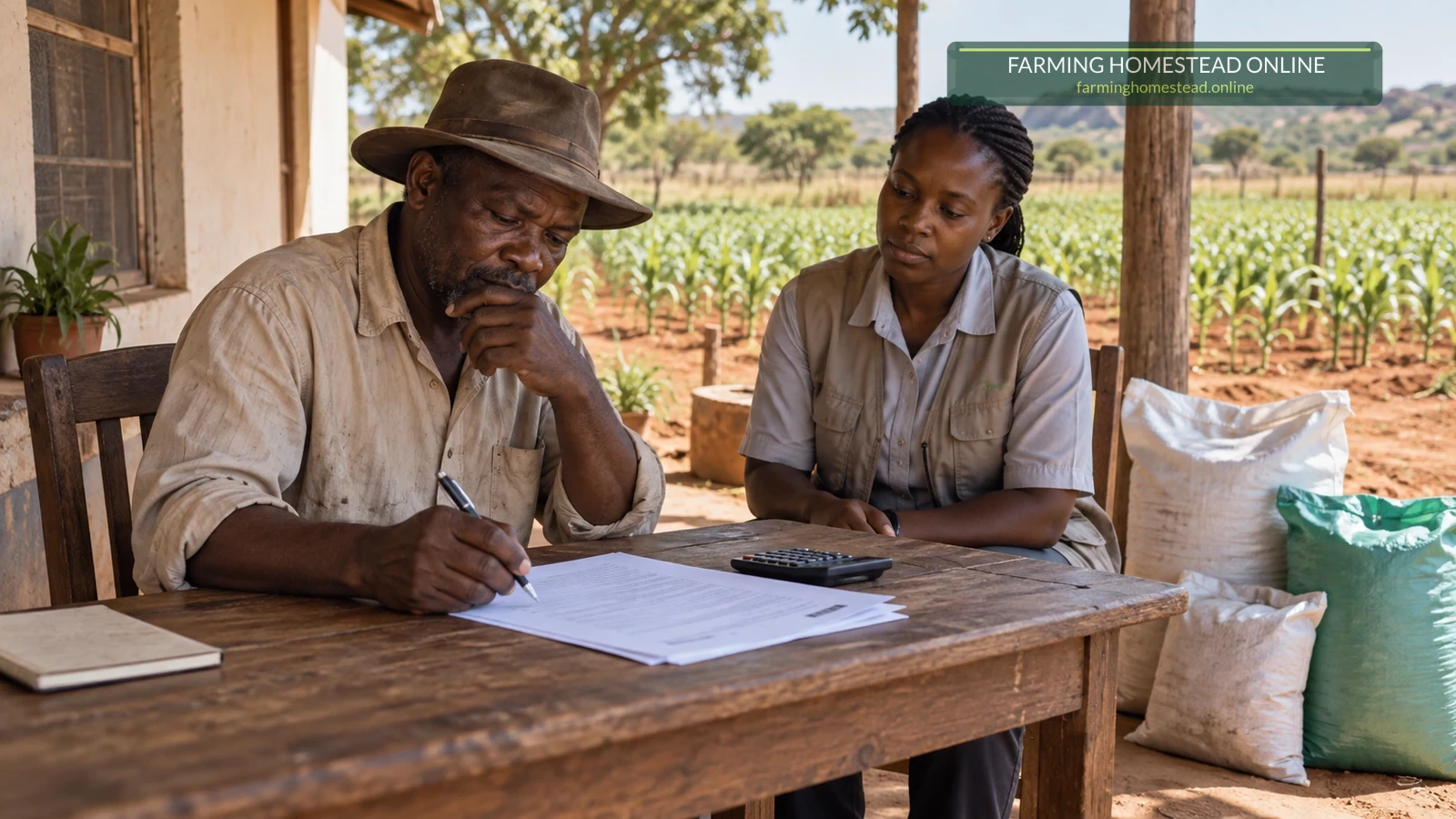
TIMB had already encouraged all growers to establish accounts with a financial institution before the 2025 season. In 2026, the procedure was clearer: the US-dollar proceeds were going to an FCA. A farmer who arrived without a working account, with incomplete KYC records, with a dormant account, or with bank details that did not match the grower registration could not expect a clean payment.
TIMB has said payment works efficiently when the banking details match the legitimate grower number in the contractor’s database. That sentence should be printed on every farmer’s pre-season checklist.
Using another person’s grower number or account is not a shortcut
The 2026 biometric system linked the person to the grower number, farm and payment. It also monitored unusual volume against registered hectares. Facebook comments showed farmers asking where they could “hire” a grower number after reaching a sales limit, while others described tobacco remaining at home because the correct selling record was missing.
That approach exposes the grower to blocked sales, a payment going to the wrong legal account holder, side-marketing investigation and a dispute that may be difficult to prove. If the money enters another person’s bank account, control of that money legally and practically sits with that account holder until it is transferred.
The safer rule is simple: the land record, grower number, biometric identity, contract and bank account must belong to and describe the real transaction. Fix the paperwork before planting or, at the latest, before booking the first bales.
“Paid” does not always mean “usable today”
The industry introduced faster payment tools. Tobacco Sales Floor said its system could credit farmers’ bank accounts within 30 minutes, and another new floor targeted payment within an hour. That is genuine progress.
But the law still allows up to two days, and TIMB repeated the two-day rule in public notices during the season. The repetition matters because late payments still occur. A farmer may also have money in an account but face network problems, bank queues, withdrawal limits, transfer charges or the difficulty of paying rural workers and suppliers who want US-dollar cash.
The 30 percent ZiG portion creates a currency mismatch
Farmers repeatedly asked the same question: if fertiliser, chemicals, fuel and labour are priced in US dollars, why is part of the crop paid in local currency?
The problem is not only the name of the currency. It is timing and use. If the farmer must convert ZiG to replace a dollar-priced input, any difference between the official value and the value actually available in the market reduces purchasing power. Fees and delays reduce it again.
In 2025, the Zimbabwe Commercial Farmers Union complained that growers had established the crop in US dollars but were being paid 30 percent in ZiG. The same 70/30 structure continued in 2026. Facebook comments under TIMB’s announcement asked for 85 percent US dollars or full US-dollar payment and said the 30 percent share did not match the currency used to buy inputs.
This is not a minor administrative complaint. It affects the farmer’s ability to return to the field.
Two days is the legal payment limit
Under Statutory Instrument 77 of 2022, a contractor who fails to pay a contract grower within two days of receiving the tobacco commits an offence. TIMB publicly reminded growers of this rule on 22 April 2026 and gave regional contact numbers for immediate assistance.
The practical farmer’s response should be organised:
- Keep the booking confirmation.
- Keep the sales sheet and bale details.
- Photograph the final sale voucher and every deduction.
- Confirm the exact bank account and phone number registered before leaving the floor.
- Record the date and time the sale was completed.
- If the money has not arrived by the end of the two-day period, report it immediately to TIMB with the grower number, contractor or floor, sale date and amount.
- Do not surrender original records to a runner or an unofficial “helper.”
TIMB’s 22 April Facebook notice listed contacts for Manicaland, Mashonaland East, Bindura, Mvurwi, Mashonaland West and Harare.
Farmers commenting below that notice raised a second problem: the money could arrive and still be cut by charges they did not fully understand. One farmer said ten bales attracted US$75 in weighing charges. Others simply wrote that the charges were too high. A separate high-engagement discussion alleged a charge of US$17 to weigh a bale. These figures came from farmers’ comments and should be checked against the farmer’s own sales voucher and the published 2026 fee schedule. The larger lesson is not in dispute: every charge needs a name, a rate and a receipt.
A new buyer was suspended—and that tells us the concerns were serious
On 4 May, 263Chat reported that TIMB had suspended Country Agro International from tobacco-buying activity over suspected pricing irregularities. Two days later, the Ministry of Agriculture said Government was investigating possible collusion and reviewing contractor relationships for price manipulation. The Minister also pointed to the sharp movement in the average price—from about US$3.42 the previous year to US$2.62 at that stage of 2026—and said the increase in crop volume did not justify underpaying farmers.
Government proposed several responses:
- limit the afforestation levy to growers who actually use firewood;
- remove the 2 percent coal corporate-social-responsibility levy;
- create a stabilisation fund to support efficient irrigation and curing;
- investigate pricing and contractor conduct;
- strengthen Zimbabwe’s international tobacco marketing.
Those actions do not prove that every buyer colluded or that every low price was illegal. They do prove that the complaints could not be dismissed as farmers merely failing to understand grade.
The timing also explains some of the anger under the Ministry’s Facebook post. Farmers said the intervention came after much of their crop had already been sold. A levy cut announced after deductions have been made does not automatically return money to the grower. A future stabilisation fund does not settle this season’s worker bill.
The response was necessary. For many farmers, it was late.
What Facebook revealed that the national figures did not
Facebook cannot replace audited statistics. It can show what questions are repeated by the people living through the season.
The same themes appeared across TIMB, Ministry and tobacco-farmer pages:
- Buyers were offering prices that did not seem to match the farmer’s understanding of the leaf.
- Ordinary farmers mistook the US$4.60 first bale for a sign of the price they might receive.
- Growers felt the national “billions” story did not match what they could show at home.
- Farmers wanted the percentage paid in US dollars increased because most inputs were bought in US dollars.
- Weighing, floor, transport, bank and other deductions were difficult to understand.
- Contract recovery could leave almost no disposable cash.
- Some farmers said they did not know how they would finance the next season.
- Growers feared that tobacco could follow cotton if producers repeatedly worked without a viable return.
- Farmers wanted TIMB physically present where bales were priced, not only issuing statements after complaints.
- Others defended basic supply-and-demand logic: too many growers and too much tobacco inevitably pushed the price down.
The strongest Facebook article was posted by Tobacco Farmer Talk on 21 May under the title “Has Zimbabwe’s Golden Leaf Become the Golden Curse?” It compared 250.3 million kilograms sold with the equivalent stage in 2025 and argued that growers had produced more while receiving less. It also listed the labour, fuel, packaging, transport and levy costs that disappear inside the national gross figure. The post attracted hundreds of reactions and more than 150 comments.
The comments were not unanimous. Some blamed oversupply. Some blamed TIMB. Some blamed contractors. Some called for farmers to stop growing tobacco. Some said the only solution was bank finance that would let farmers sell freely to the highest bidder. But almost everyone was discussing the same underlying problem: who controls the price and who carries the risk?
That is exactly the right question.
Did small-scale farmers make a return on investment?
There is no single national number that can answer this. TIMB publishes mass, price and value. Those are not the same as a farm-level profit-and-loss account.
To know whether a farmer made money, we need at least:
Net return = total tobacco sales – contract recovery – paid inputs – hired labour – curing – packaging – transport – floor and statutory charges – bank costs – interest – crop losses – the value of family labour and management.
Most public statements stop at total tobacco sales. That makes a farmer with a US$7,000 sale look successful even if US$3,000 clears a contract, US$2,500 was paid outside the contract and the family worked for nine months without drawing a wage.
The available evidence supports four groups of farmers.
Group 1: efficient, high-quality contract growers
These farmers could still make a positive return. Their yields were high, the leaf matched demanded grades, the barn was efficient, the debt was controlled and the contract price stayed above the national average. They were not the people receiving ten cents or one dollar for most of the crop.
For this group, 2026 was less profitable than 2025, but not necessarily a loss.
Group 2: average contract growers with heavy recovery
These farmers produced enough to clear or mostly clear the input account but retained a much smaller balance. They felt the price fall immediately because the debt was fixed while gross crop income fell.
For this group, 2026 may have produced cash but a weak return on land, labour and risk. Many could struggle to self-finance the next crop and return to the contractor.
Group 3: self-financed auction growers
This group faced the lowest channel average—about US$1.91 per kilogram by late July. A farmer producing near US$2.00 per kilogram could break even or lose money before valuing personal labour.
For many auction growers, 2026 was plainly a bad year.
Group 4: low-yield or low-grade growers
These farmers were in the greatest danger. Low yield spreads fixed costs over fewer kilograms. Low grades then reduce the price of each kilogram. Rejected bales add another trip, more handling and more delay.
For this group, gross revenue could fail to cover the true cost of production. If contracted, unpaid debt could follow the farmer into the next season.
This is why the fairest overall judgment is not “every small farmer lost money.” It is: the season pushed a large part of the small-scale sector toward break-even, weak disposable income or loss, while rewarding only the better-yielding and better-graded end of the crop.
A price can be legal and still be commercially impossible
Farmers often ask whether Government can simply set a high minimum price. Tobacco is not sold like a single uniform commodity. Each bale carries a grade based on leaf position, colour, quality and style. A flat high minimum could make low-grade leaf unsaleable if export buyers will not pay for it.
But that does not mean the grower is powerless or that any price is acceptable.
The industry can still improve:
- transparent grade explanations at the bale;
- visible daily price information by grade and floor;
- independent appeals when the grower disputes a grade;
- stronger competition between licensed buyers;
- published and understandable charge schedules;
- fast action against collusion or underpricing;
- contracts that disclose the real cash price of every input;
- affordable bank finance that separates the lender from the buyer;
- more local processing so Zimbabwe is not forced to sell almost all value as raw leaf;
- crop forecasts that are tied to confirmed demand, not only production targets.
Zimbabwe can be proud of 357 million kilograms and still admit that US$2.49 per kilogram is a warning.
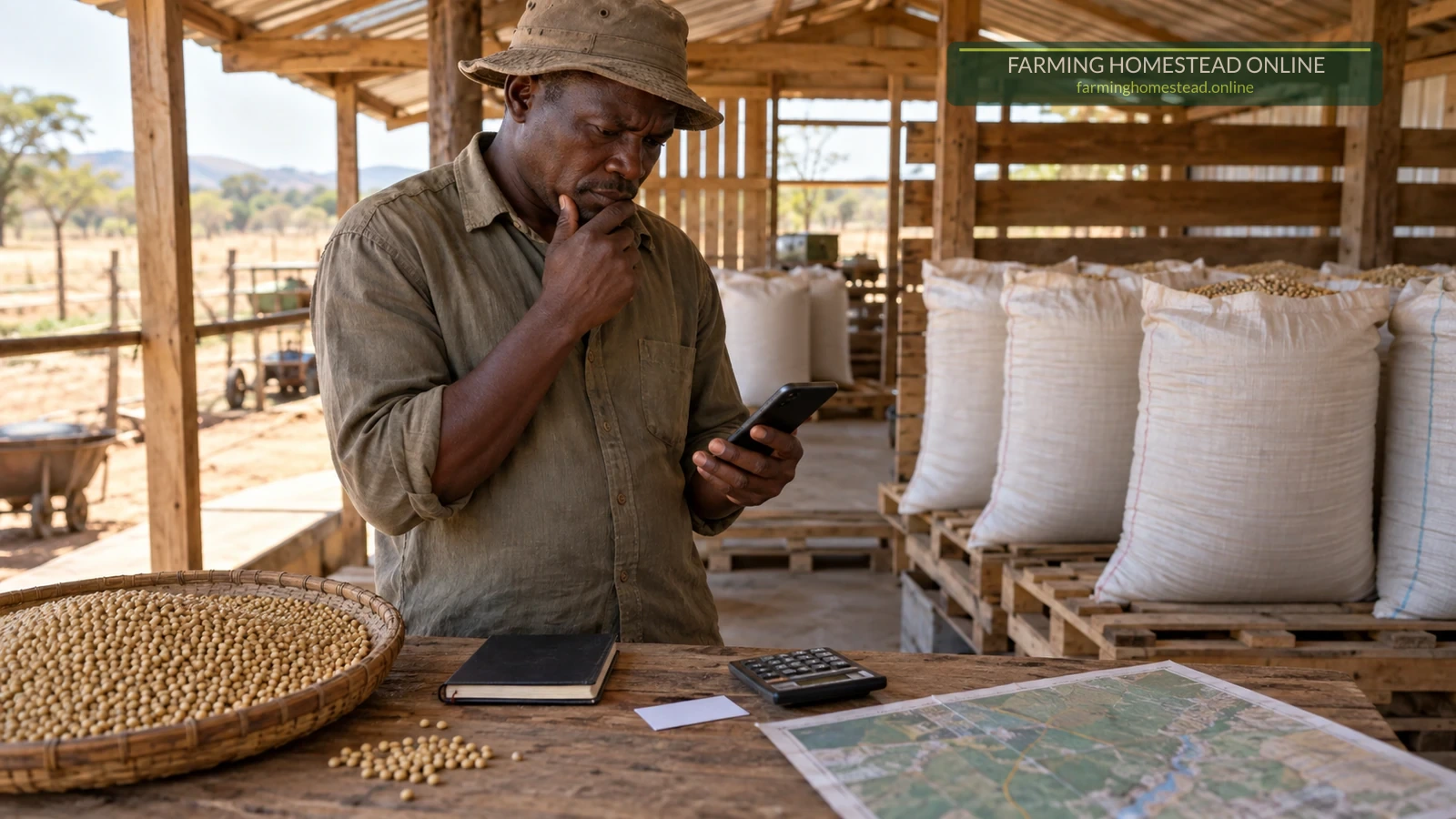
The 2027 survival plan should start with a bad-price budget

The worst mistake after 2025 was to use a good year as the normal year.
A farmer planning the next crop should build three budgets before accepting a contract or buying inputs:
- Stress case: low yield and US$1.75 to US$2.00 per kilogram.
- Base case: normal farm yield and US$2.50 per kilogram.
- Strong case: good yield and US$3.25 or more per kilogram.
If the project only survives in the strong case, it is not a safe project. It is a bet on price.
The farmer should also ask these questions in writing:
- What is the full US-dollar value of the input package on the day I sign?
- What interest, administration, insurance and transport amounts can be added?
- Which expenses are not covered?
- How many kilograms must I deliver before the debt is cleared at US$2.00, US$2.50 and US$3.00 per kilogram?
- Can the contractor change input prices after delivery?
- How is a disputed grade appealed?
- Which bank account will receive the USD and ZiG portions?
- Are my name, grower number, biometric record and bank details identical on every system?
- What charges will appear on the final voucher?
- What happens if drought, hail, disease, barn failure or low prices prevent full repayment?
Then calculate the break-even price.
Break-even price per kilogram = total true cost ÷ expected saleable kilograms.
If the farmer expects 2,000 saleable kilograms and the full cost is US$4,000, the break-even price is US$2.00 per kilogram. That farmer cannot look at a US$4.60 first bale and relax. The important question is how many of the farm’s actual grades could fall below US$2.00.
Six practical moves that protect the next crop
1. Do not expand hectares until the existing hectare pays
The 2026 national result showed the danger of chasing volume. More hectares multiply labour, curing, fuel and debt. They do not guarantee more profit. First lift saleable yield and the share of leaf reaching the better grades.
2. Treat curing as a profit centre
Many farmers lose the value created in the field inside the barn. Poor heat control can produce dark, scorched, green, sponged or fuel-tainted leaf. Repair leaks and furnaces before reaping. Record temperatures and times. Compare fuel used per kilogram. An efficient barn protects colour and reduces the cost of every cured kilogram.
3. Grade for the buyer, not for the eye
Do not mix leaf positions because the colours look similar. Separate clean lemon, orange, darker and damaged styles. Remove foreign matter. Do not over-condition. Ask an experienced grader to explain why each pile belongs together.
Presentation cannot turn poor tobacco into premium tobacco. It can stop good tobacco being discounted because of avoidable mixing and contamination.
4. Fix the payment route before planting
Open and test the FCA. Confirm KYC. Renew the grower number. Complete biometric registration. Make a small transaction through the account. Check the exact spelling of the name and identification number. Keep the phone number active.
Do not wait until tobacco is on the truck.
5. Keep a one-page crop account
Every week, write down cash spent, inputs received on credit, labour days, fuel, bales, kilograms and money received. When the sales sheet arrives, reconcile every deduction.
The farmer who does not know the cost per kilogram cannot know whether a US$2.70 price is profit or a slow loss.
6. Build one other income line
Tobacco can remain the main cash crop without being the household’s only hope. Food crops reduce the need to buy maize after a bad tobacco sale. Poultry, vegetables, sweet potatoes, goats or another enterprise can pay smaller bills during the long tobacco production cycle.
Diversification is not an insult to tobacco. It is protection against a market the farmer cannot control.
What 2025 taught—and what 2026 corrected
The 2025 season taught farmers that Zimbabwe could produce a huge crop and earn more than US$1 billion. Favourable weather, improved grading and strong deliveries created real opportunity. It encouraged more production.
The 2026 season corrected the dangerous assumption that the market would pay the same price for even more tobacco.
Production rose only slightly above the 2025 final record, but the average price fell by about a quarter. Auction growers suffered a far deeper fall. The rejection rate increased. The crop missed the 400-million-kilogram ambition. Gross value fell by hundreds of millions of dollars.
The lesson is not “stop growing tobacco.” Tobacco remains one of Zimbabwe’s most important farm businesses and one of the few crops with an organised national marketing system, established buyers and a path to foreign currency.
The lesson is: stop measuring tobacco success in kilograms alone.
Measure:
- saleable kilograms per hectare;
- average price by grade;
- curing fuel per kilogram;
- hired labour per kilogram;
- total debt per hectare;
- total charges per bale;
- number and value of rejected bales;
- USD actually received;
- ZiG actually received and what it bought;
- cash left after all recoveries;
- return on the farmer’s own labour and capital.
That is the scorecard that tells the truth.
Final verdict: a bumper harvest can still be a bad business year
Zimbabwe’s 2026 tobacco season was not a production failure. It was a market and margin failure for many of the people who produced the crop.
The country achieved its highest volume. Farmers showed skill, resilience and a willingness to invest. Contract systems moved enormous quantities of tobacco. Digital payments became faster at some floors. Government eventually acted on levies, pricing concerns and buyer conduct.
But the average farmer was paid much less for each kilogram. The auction channel fell to a level that could sit at or below the full production cost of a small grower. Contract growers had a better price, but the debt and deduction structure meant the gross sale could bear little resemblance to the cash available at home. The 70/30 payment split added a currency problem. Quality indicators were weaker. A missing or mismatched FCA, grower number or biometric record could delay the money altogether.
So, was it a good year?
For Zimbabwe’s tobacco volume, yes.
For premium growers who controlled yield, quality, debt and curing cost, it could still be profitable.
For a large number of ordinary small-scale farmers, no. It was a year of more work for less value, and for some it was a year in which the crop paid the system before it paid the grower.
That is the warning to carry into the next season: the first bale is not your price, the national total is not your income, and a contractor’s input pack is not your profit.
Plan the farm from the net figure backwards.
Turn the lesson into a stronger farm plan
If the 2026 season exposed gaps in water, curing, bookkeeping, market planning or income diversification on your farm, start with a project that closes one of those gaps. Browse Farming Homestead’s Project Packs, compare options by starting budget, or look at practical water and irrigation projects before committing to another expensive hectare.
A strong project plan will not control the world tobacco price. It will show what you can control: startup order, true costs, infrastructure, cash flow, risk and the point at which the project must begin paying you back.
Sources checked for this guide
The national figures and rules in this article were checked against TIMB-published statistics carried by the TIMB website, the Zimbabwe Tobacco Association’s 2026 sales procedures, the Reserve Bank’s 2026 Monetary Policy Statement, the Government’s March 2026 Cabinet update, the late-season day-95 comparison, and the reported final season close.
The farmer-conversation section was informed by public, read-only review of the same signed-in Facebook tab supplied for the assignment, including TIMB’s posts on price stabilisation, the 70/30 payment split, the two-day payment rule, the Ministry’s levy and stabilisation-fund response, and Tobacco Farmer Talk’s high-engagement “Golden Curse” discussion. Individual comments were treated as on-the-ground testimony, not as audited financial data.

Join the farm conversation
Share what is working on your farm, ask a clear question or add a useful local experience.
Sign in to leave a reply
A free account keeps the discussion useful and places your name beside your reply.
Quickest option
After sign-up or sign-in, you will return to this article and this reply box.