
Prepared by the Farming Homestead Online editorial team. Sources and wording last checked on 19 August 2026. Use the guide for planning, then confirm current facts for your exact site.
Short answer: Do not pay because the land looks productive or because someone shows you one document. First verify who has authority to sell or lease, the exact tenure, boundaries, current occupants and users, permitted land use, water, access, debts and the written agreement.
Three rules that prevent expensive mistakes
- Use independent verification, not only documents or professionals supplied by the seller.
- Do not build permanent structures until the right to occupy, use and develop the land is clear.
- Make payment stages depend on completed checks and a written agreement prepared or reviewed by a qualified Zimbabwean legal practitioner.
1. Verify the person offering the land
Check the person’s full identity and the legal capacity in which they act. If a company, estate, family, trust, cooperative or representative is involved, ask for the records that prove authority to sign. A person who knows the property is not automatically entitled to sell or lease it.
2. Identify the exact form of tenure
Ask what document creates the right to the land and which authority issued it. A title deed, permit, offer letter, lease, subdivision right or communal allocation does not carry the same rights or transfer process. Do not use one label for all rural land.
3. Confirm transfer or leasing rights with the responsible office
Take the document details to the correct Ministry office, Deeds Registry, local authority or other responsible body. Ask whether the interest exists, whether it can be transferred or leased, and which approvals are required. Do not rely on a photocopy, screenshot or verbal assurance.
4. Match the land on paper to the land on the ground
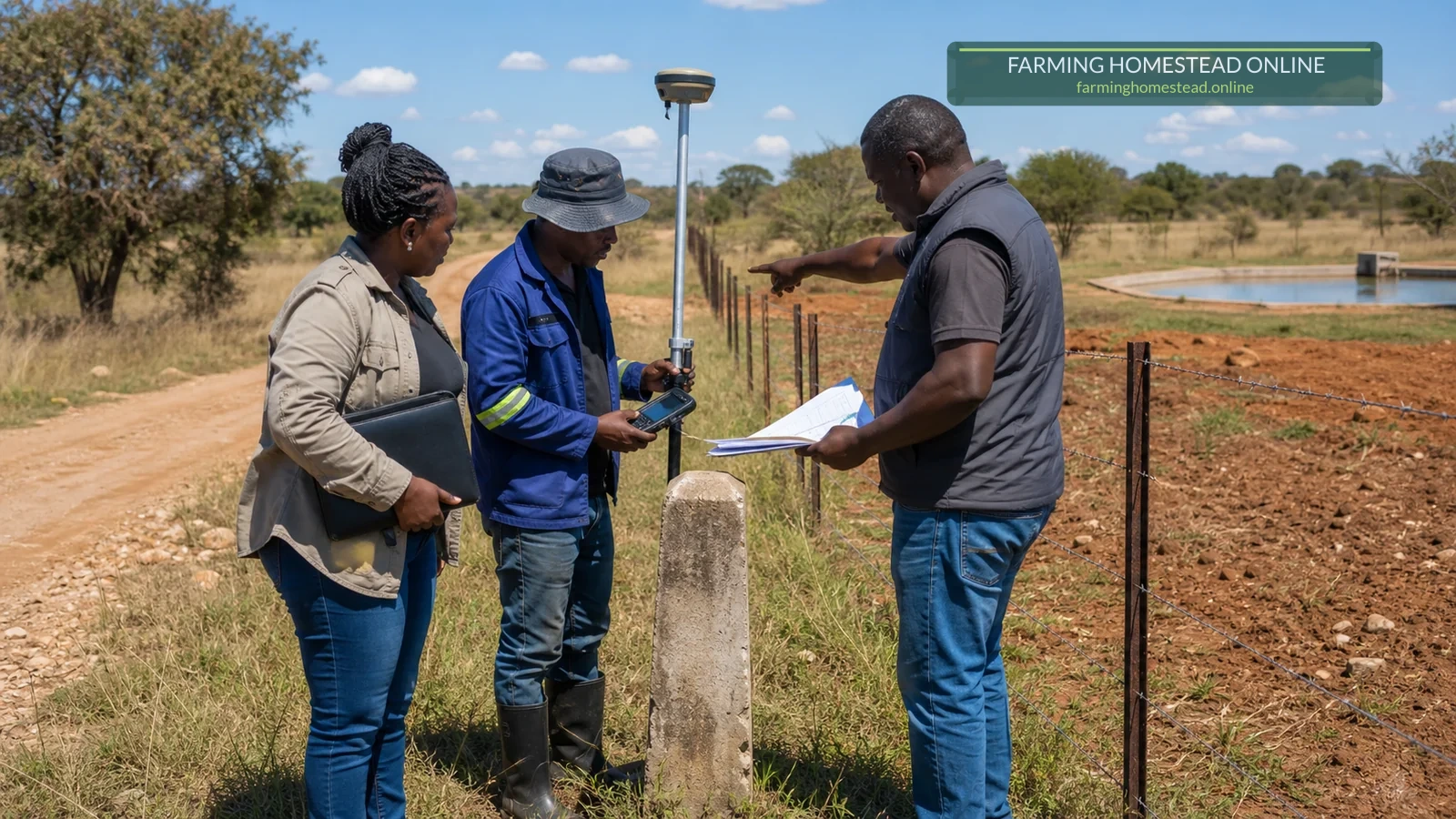
Check the property description, diagram, coordinates, beacons, area and neighbouring properties. Use a registered land surveyor where boundary or subdivision work is needed. Walk the boundary and record any disagreement before signing.
5. Check occupants, users and competing claims
Ask who lives, farms, grazes animals, collects water, crosses or stores property on the land. Speak to neighbours and the relevant local structures. A clean-looking field can still be subject to an occupation, family, labour, grazing or access dispute.
6. Confirm the intended land use
Tell the authority and your advisers exactly what you plan to build or farm. A home, livestock unit, irrigation scheme, food-processing room, shop, tourism activity or subdivision can require different permissions. “Agricultural land” does not mean every activity is automatically allowed.
7. Prove access
Check the legal and physical road to the property in both wet and dry seasons. Ask who maintains it, whether gates or servitudes are involved and whether a truck, ambulance, drilling rig or input delivery can reach the site.
8. Investigate water before valuing the farm
Record existing boreholes, wells, dams, rivers, canals, pipes and water-sharing arrangements. Ask for borehole logs, yield tests, pump records, water quality results and current permissions. A nearby river or old borehole does not prove a lawful, reliable supply for your project.
9. Check soil, Natural Region and environmental limits
Use the exact location to confirm the current agro-ecological zone. Inspect soil, slope, drainage, erosion, wetlands, flood risk, invasive plants and signs of contamination. A green visit during the rainy season can hide dry-season limits.
10. Check services, rates and hidden costs
Confirm electricity availability, distance to connection, mobile signal, sanitation options, waste handling, fencing, security and the condition of buildings and equipment. Ask which rates, levies, taxes, loans, arrears or service debts affect the transaction, then verify the answers.
11. Price the first usable stage
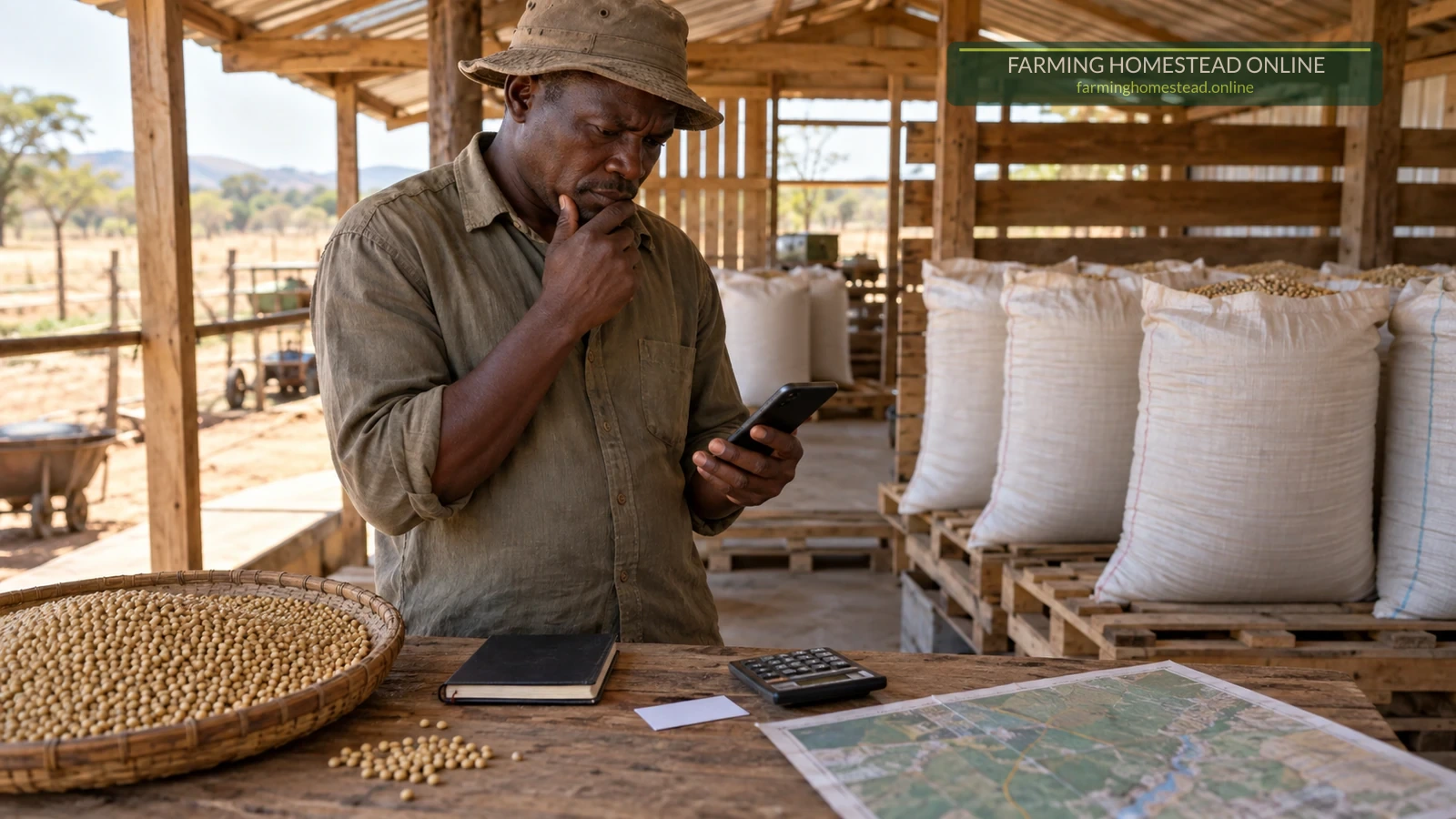
Land price is only the first line. Add verification, survey, legal work, permissions, access repairs, water investigation, fencing, sanitation, power, storage, labour housing where needed, insurance, transport and working capital. A cheaper remote property can cost more to make usable.
12. Put the full agreement in writing
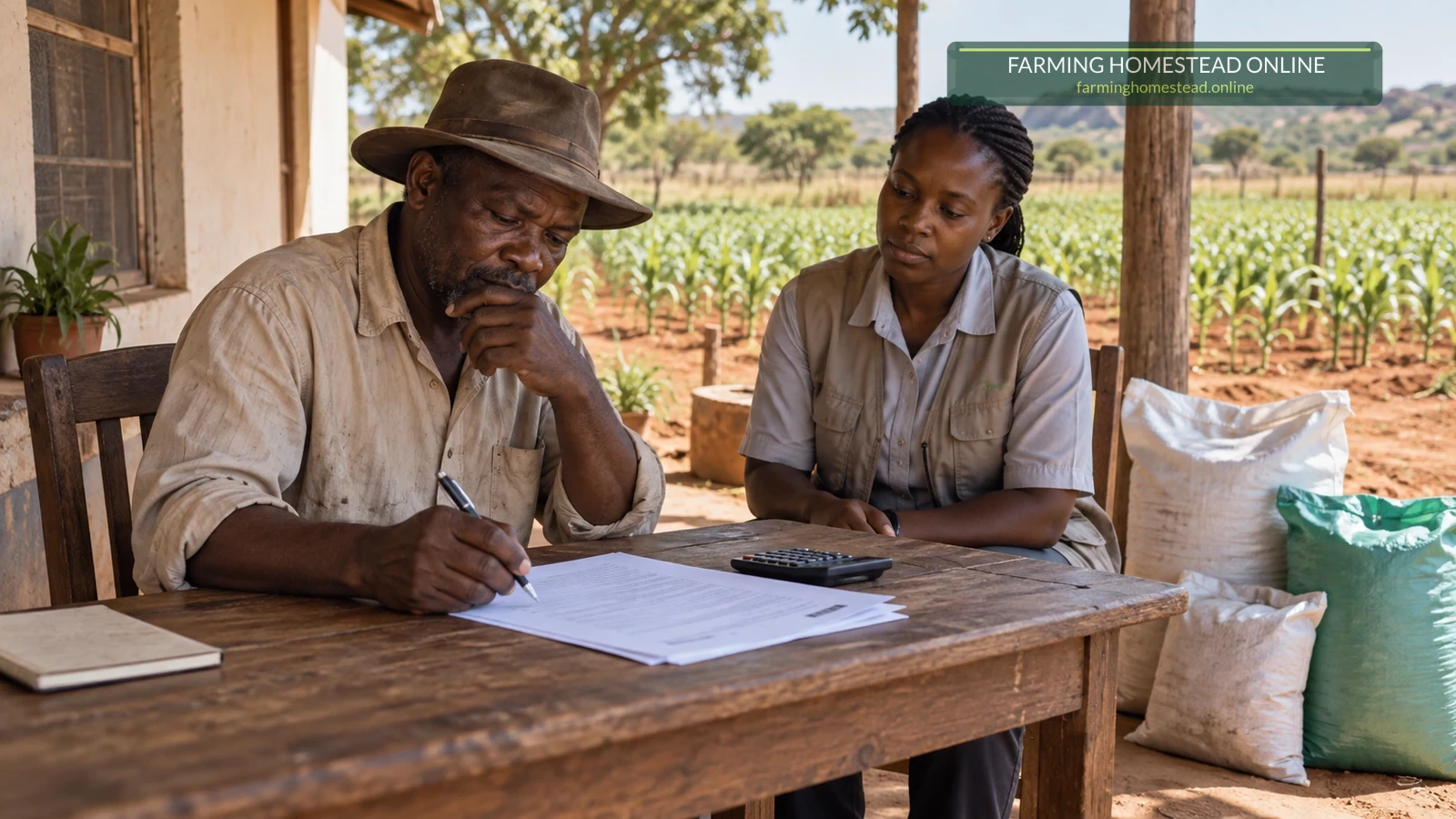
The agreement should identify the parties, land, tenure, term, price, payment stages, permitted use, improvements, maintenance, water, access, rates, default, dispute process and what happens at the end of a lease. Do not make large irreversible payments on a receipt or chat message alone.
Buying, leasing or using family land
| Route | Possible advantage | Question that must be answered |
|---|---|---|
| Buying | Longer-term control when a valid transfer can be completed | What exactly is being transferred, by whom and with which approvals? |
| Leasing | Lower initial commitment and a way to test an enterprise | Can the lessor grant the lease, and who owns improvements when it ends? |
| Family land | May reduce direct land cost | Who has agreed, what right do you receive and what happens if family circumstances change? |
| Partnership or joint venture | Can combine land, skills and capital | Who contributes what, who makes decisions and how are losses, assets and exit handled? |
Questions people ask
Is a title deed the only safe land document?
Different lawful tenure forms exist, and each has its own limits and process. The safe approach is to identify the exact tenure and verify it with the responsible authority and an independent legal practitioner.
Can I build while the paperwork is being processed?
That can create serious risk. Wait until your advisers confirm the right to occupy, build and use the land and all necessary permissions are in place.
Should I pay a deposit to hold the land?
Only after independent advice on a written arrangement that explains the amount, purpose, conditions, refund position and who may receive it. Urgency is not a substitute for verification.
Sources and local checks
This guide was reviewed on 19 August 2026. It refers to the Ministry of Agriculture’s land administration services, its land-use planning manual and the current A2 application guidance. These sources do not replace a property-specific search, official confirmation, survey or legal advice.
Join the farm conversation
Share what is working on your farm, ask a clear question or add a useful local experience.
Sign in to leave a reply
A free account keeps the discussion useful and places your name beside your reply.
Quickest option
After sign-up or sign-in, you will return to this article and this reply box.