
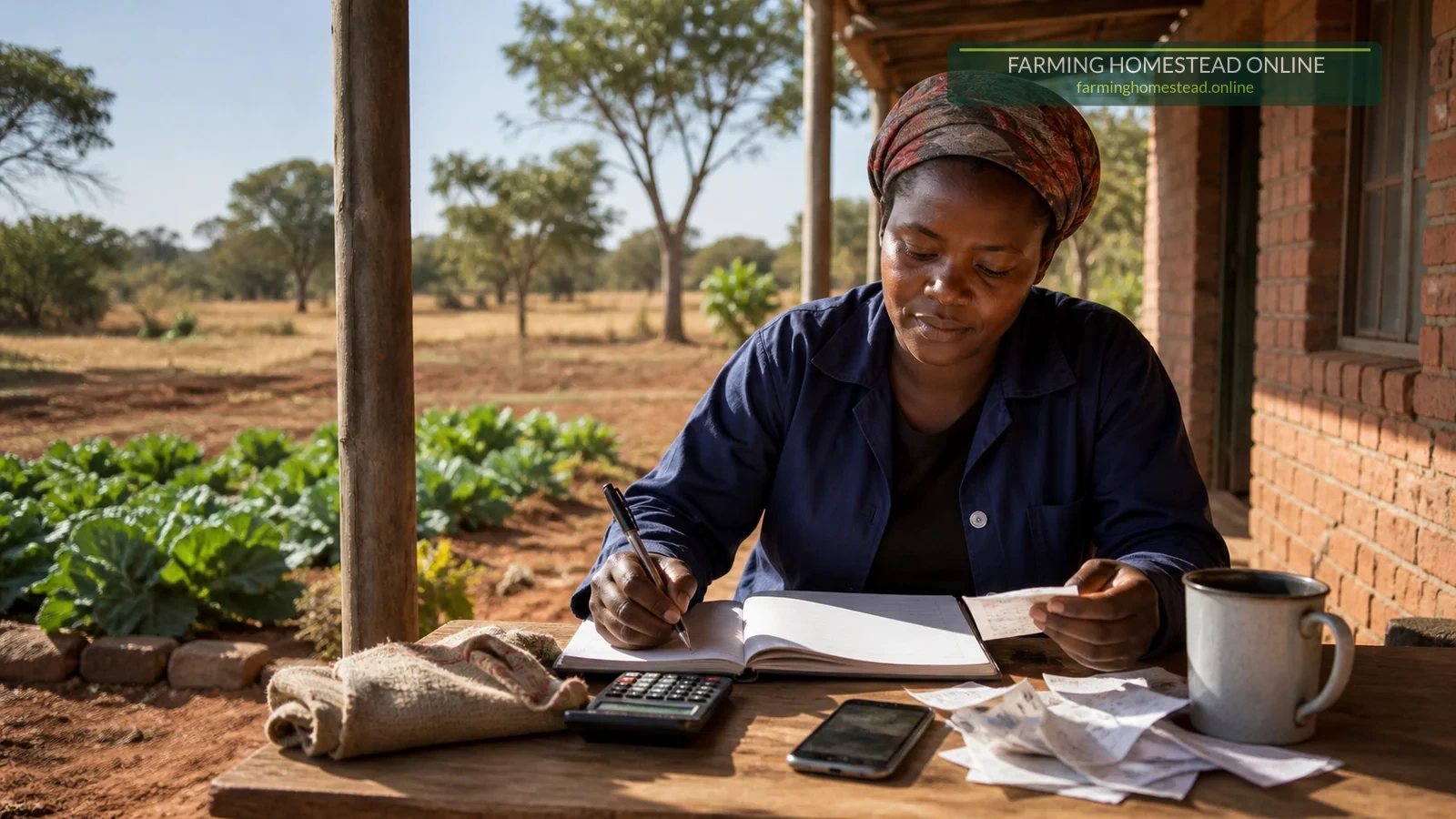
Prepared by the Farming Homestead Online editorial team. Sources and wording last checked on 2 September 2026. Use the guide for planning, then confirm current facts for your exact site.
Short answer: You do not have to wait until you can afford the whole farm. Choose one small unit with a clear buyer, cost it properly, build only what that unit needs, sell, keep records and reinvest. A loan becomes useful after you know what sells, how long the cash takes to return and what the real profit is.
You have the land. You have ideas. You may even have water nearby. The problem is money.
The greenhouse quotation is too high. The borehole needs work. Fencing, tanks, pipes, chicks, feed, seed and labour all want cash at the same time. When you add everything, the dream begins to look impossible.
This is one of the loudest questions in farming conversations: How do I start when I do not have enough capital?
The wrong answer is to tell you that money does not matter. It does. Farming needs working capital. The better answer is that you may not need all the money at once.
A farm is not one purchase. It is a chain of small systems. Water. Production. Handling. Selling. Records. Growth. If you build the chain in the right order, the first working section can help pay for the next one.
That is staged farming.
The biggest mistake is trying to build the finished farm first
Many new landholders price the farm they hope to have in five years. They add a new borehole, solar pump, large tank, full fence, worker’s house, several animal units, a tractor, a greenhouse, a storeroom and a vehicle.
Then they compare that number with the cash in hand and stop.
Do not price the finished picture first. Price the smallest unit that can produce something a known customer will buy.
That unit still has to be proper. It needs enough water, the right inputs, basic security, a production calendar and money to reach the first sale. Starting small does not mean starting carelessly. It means reducing the number of moving parts until you can manage them well.
Here are nine practical ways to do it.
1. Choose one first-paying unit
Your first unit must be easy to describe in one sentence.
For example:
- a small seedling section supplying nearby vegetable growers;
- a 200-layer unit selling eggs on a weekly route;
- two or three vegetable beds serving households and one food outlet;
- a small groundnut crop linked to roasting or peanut-butter processing later;
- a limited flock of indigenous chickens for a known local market; or
- a nursery selling grafted fruit trees while a longer-term fruit-tree project develops.
Do not begin with five enterprises simply because social media makes each one look profitable. Every extra enterprise adds a buyer, a disease risk, a buying list, a calendar and a record book.
Ask one question: Which small unit can I operate well and sell consistently with the water, skill and time I have now?
If the answer is not clear, look through the full Farming Homestead Project Pack catalogue and compare projects by land, water, budget and experience.
2. Find the buyer before buying the inputs
“There is always a market” is not a buyer.
A real buyer has a name, location, expected quantity, preferred size or grade, buying day and payment method. You may still sell to more people later, but you need enough detail to plan the first production run.
Before planting or placing chicks, speak to at least five possible customers. Ask:
- What do you buy every week or every month?
- What quantity do you normally take?
- What quality or size do you reject?
- Do you collect, or must the farmer deliver?
- How quickly do you pay?
- What months are difficult for you to find supply?
The answers may change your project. A farmer who planned tomatoes may discover a stronger regular demand for seedlings, herbs, eggs or graded onions. That is useful information, not failure.
The Half-Hectare Peri-Urban Seedling Nursery and Leafy-Vegetable Project Pack is a good example of a farm designed around repeat local demand and more than one sales route.
3. Start with a service that earns before the main project matures
Some farms can earn by helping other farmers.
A seedling nursery can sell trays. A small hatchery can sell chicks. A grinder or press can charge for processing. A farmer with a reliable water point can raise planting material. A livestock project can sell hay, fodder planting material or manure before reaching its full animal numbers.
Service income is powerful because it can shorten the wait between spending and receiving cash. It can also introduce you to future buyers and suppliers.
The Chick Hatchery, Sunflower Pressing and Service Hub Project Pack shows how the service side can support the production side instead of waiting for one large harvest.
4. Split infrastructure into now, next and later
Not every building belongs in phase one.
Make three columns:
| Build now | Add after proof | Add after growth |
|---|---|---|
| Water needed for the first unit | Extra tank or second line | Full expansion network |
| Secure input storage | Larger store | Dedicated packhouse |
| Basic working shelter | Permanent upgraded unit | Additional production block |
| Minimum boundary control | Stronger internal divisions | Complete long-term layout |
| Simple wash and grading area | Better tables and crates | Cold handling if the market pays for it |
“Later” does not mean “never”. It means the item must wait until production volume or buyer requirements justify it.
This protects cash. It also prevents an expensive mistake: placing permanent buildings where they later block vehicle access, drainage, future pens or irrigation lines.

5. Rent or share equipment before buying it
A tractor looks like progress, but ownership creates more costs: fuel, service, tyres, repairs, security and a driver. If you need tillage for a few days, hiring the work may be cheaper than owning the machine.
The same test applies to transport, drilling, land preparation, shelling, milling, pressing and cold space.
Before buying an asset, write down:
- how many days per month it will work;
- what hiring the same service would cost;
- who will operate it;
- who will repair it;
- what happens when it is idle; and
- whether customers will pay enough to turn it into a service business.
Buy when regular use or service income makes ownership sensible. Until then, keep your cash in production and selling.
6. Use partnerships for a specific gap
A useful partnership has a clear job.
One person may provide land and water. Another may provide working capital. A buyer may provide seed or crates against an agreed supply. A farmer group may share transport. A relative abroad may fund one defined phase instead of sending untracked money into a general farm budget.
Write down the contribution, ownership, decision rights, payment order, record access and exit method before money moves.
Avoid the vague deal: “You bring money, I will do the farming, then we share.” Share what? Gross sales? Profit after which costs? Who carries a crop loss? Who owns the pump?
A simple written agreement protects the relationship and the project.
7. Give every outside dollar one job
Many farms start with salary money, remittances or income from another business. That can work, but only if the money is controlled.
Do not send a round amount because “the farm needs money”. Fund a named item:
- 200 metres of pipe against a checked quotation;
- feed for a defined flock and period;
- seed and fertiliser for a measured area;
- construction to one agreed stage; or
- delivery costs for one confirmed order.
Record the amount, purpose, supplier, proof of delivery and balance. When the farm begins selling, keep sales records separate from household money.
Clarity turns outside income into patient start-up capital. Confusion turns it into a permanent leak.

8. Reinvest by rule, not by mood
The first sales can feel like profit, but the next production cycle still needs money.
Create a simple rule before the money arrives. For example, every sale is divided into:
- replacement inputs for the next cycle;
- operating costs already owed;
- a reserve for losses and repairs;
- the next approved farm improvement; and
- a small owner draw only after the other needs are covered.
The exact percentages will depend on the enterprise. The important point is the order.
Do not use all first sales to celebrate, then borrow for the same inputs again. Protect the next cycle first. A farm grows when cash keeps moving through production, sale and reinvestment.
9. Borrow after the project has evidence
A loan is not automatically bad. It is a tool. The question is whether the tool fits the job.
A short production cycle may carry short-term working capital if the market and margins are strong. A long-term asset needs finance whose repayment period matches the years in which the asset will produce value. Borrowing short and investing long creates pressure before the project is ready.
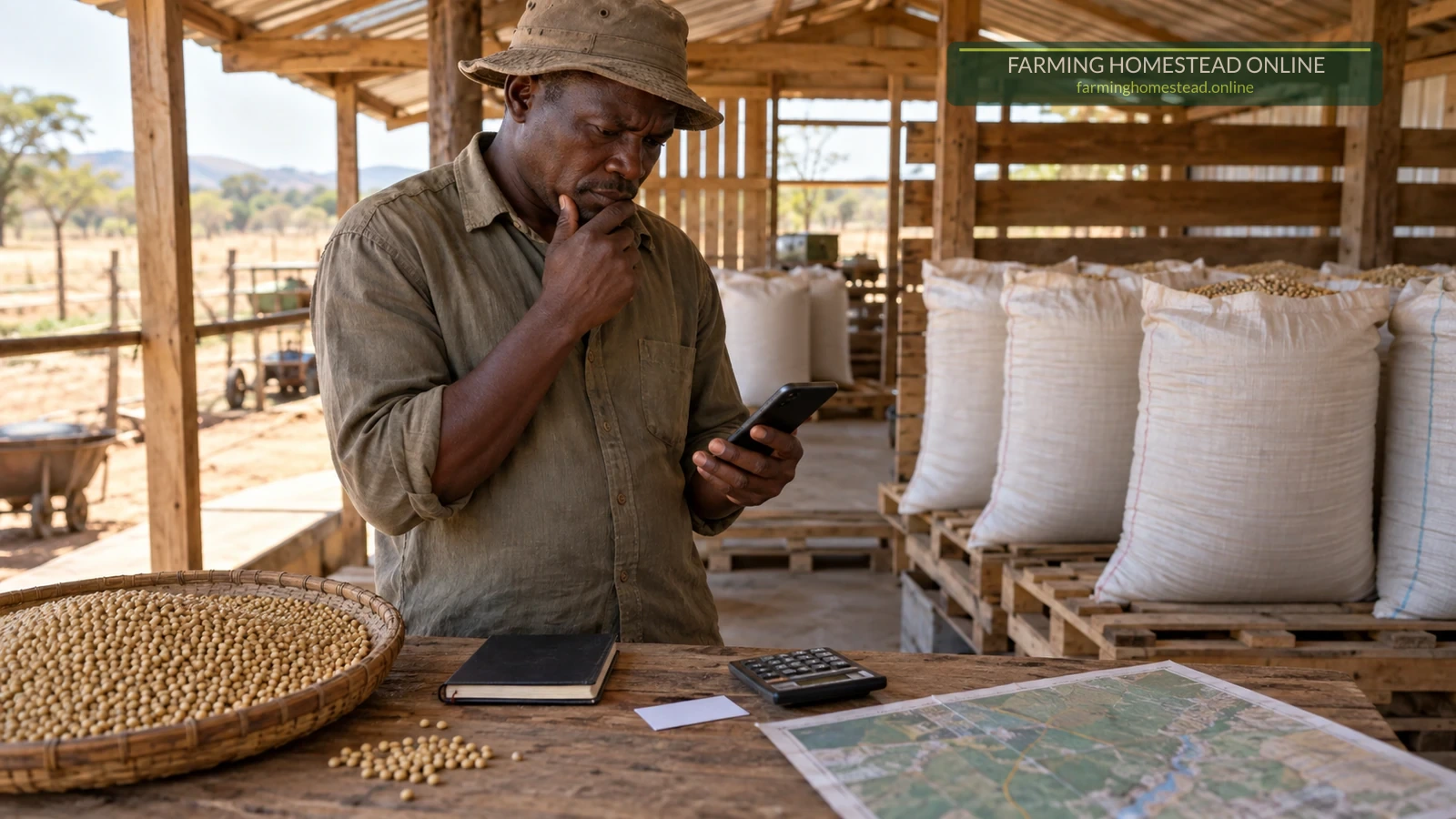
Evidence improves the decision. Even a small pilot can show:
- actual input use;
- real yield or production rate;
- mortality or loss rate;
- average selling price;
- days from spending to payment;
- transport and marketing cost; and
- profit after all costs.
The Reserve Bank of Zimbabwe’s 2022 FinScope MSME survey found that farmers in the survey used retained earnings from farm sales more often than formal credit for working capital. That is not a reason to reject finance. It is a reminder that proven sales can become the first source of growth.
A simple staged example
Imagine a landholder who wants a mixed egg-and-garden project but cannot fund the full design.
Phase 1: prove water and buyers
They test the water source, measure daily supply, prepare a small garden, buy reusable crates and supply ten households. They record every input, delivery and payment.
Phase 2: add the first egg unit
After confirming a regular egg route, they build the minimum proper poultry unit for the planned starting flock. They fund the birds, feed, vaccinations, bedding, lighting and losses all the way to reliable laying. They do not count eggs that have not yet been laid as money.
Phase 3: connect the systems
Vegetable sales help with weekly cash. Egg customers become vegetable customers. Properly managed manure supports soil fertility. The owner adds storage, stronger water backup and the next production block only when the records justify it.
The Two-Hundred-Layer Egg and Market-Garden Project Pack provides the connected layout, build phases, operating sequence and buying logic for this type of start.
The seven-question loan test
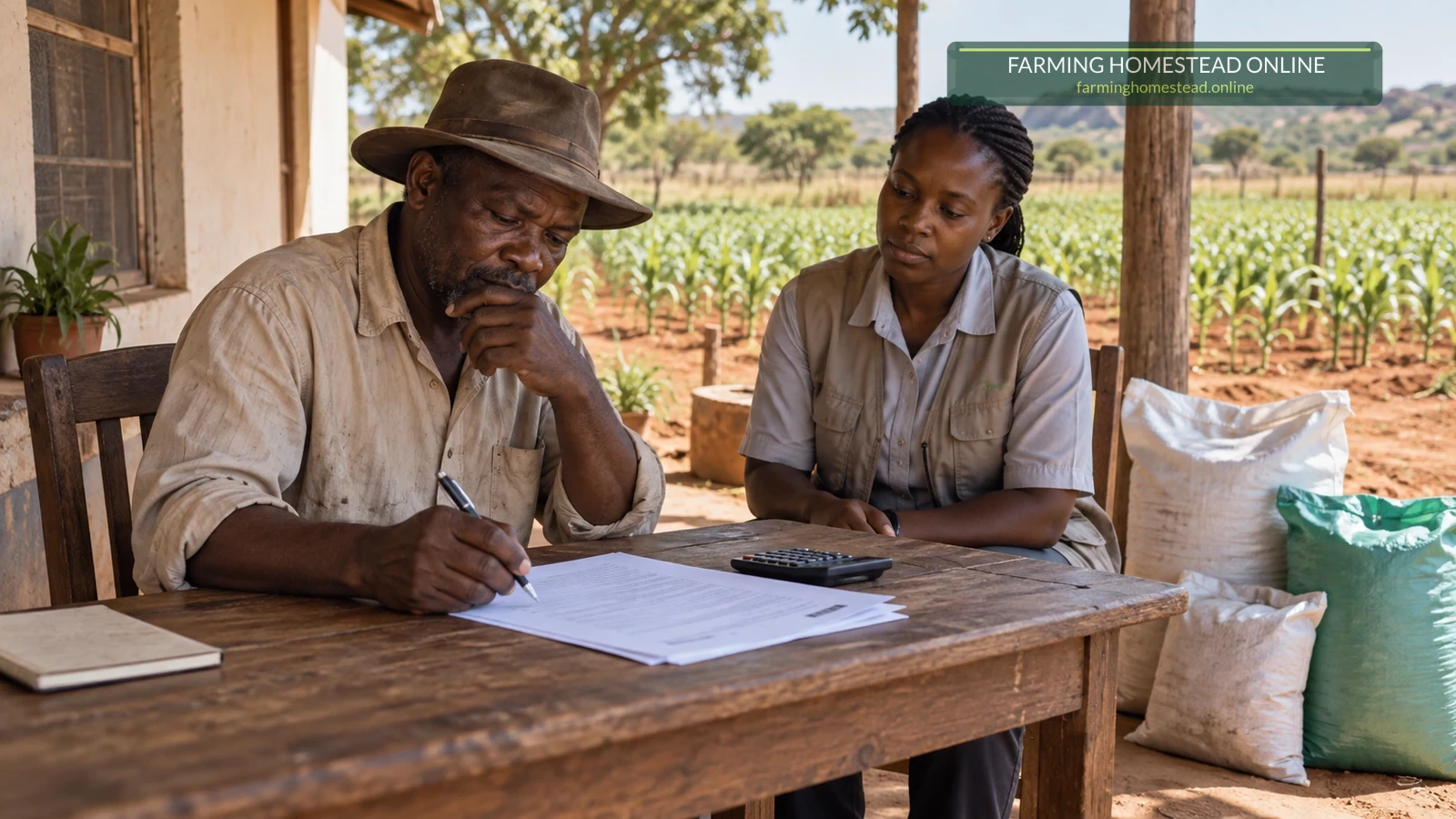
Before signing, answer these questions on paper:
- What exact problem will the borrowed money solve? “Grow the farm” is too broad.
- What will produce the repayment money? Name the product, buyer and expected payment date.
- What is the lowest realistic sales case? Do not test the loan only against your best yield and best price.
- What happens if the buyer pays late? The repayment date will still arrive.
- Does the loan period match the enterprise? Tree crops, buildings and machinery do not repay like fast vegetables.
- Have you included interest, fees and all operating costs? Gross sales are not free cash.
- What useful asset or stronger earning ability remains after repayment? A good loan should leave the business better, not merely busier.
AFC’s public agricultural-finance information separates working-capital needs from capital spending, and its equipment-finance application asks for planned yield, price, receipts, costs and surplus as well as historical performance. Those are the same numbers a farmer should know before approaching any lender.
Which small start fits your situation?
| If you have… | Consider starting with… | First thing to prove |
|---|---|---|
| Little land near many households | Seedlings or leafy vegetables | Weekly repeat buyers |
| A modest secure structure and steady market | A controlled layer unit | Feed cost and egg route |
| Dryland plus grain knowledge | Drought-tolerant grain with later value addition | Yield, storage and processor demand |
| Livestock interest but limited herd capital | Fodder, hay or planting material first | Local livestock customers |
| A long-term fruit-tree goal | A small well-planned block plus bridge income | Water, cultivar, buyer and grade |
The aim is not to choose the cheapest project on the internet. It is to choose the smallest complete project that fits your place.
A Project Pack can stop expensive guessing
Starting in stages only works when the stages connect. A cheap poultry house in the wrong position, an undersized water line or a crop planted without a handling area can cost more to correct later.
Farming Homestead Project Packs show the intended layout, sequence, quantities, operating flow, timeline, costs, risks and minimum workable phase. You can see the free preview first, choose the Pack that fits your land and buy the full Pack for US$10 through the existing WhatsApp process.
Compare all Project Packs by land, water, budget and enterprise.
Frequently asked questions
Can I really start farming with no money?
Land alone will not buy seed, feed, water equipment or labour. You need some resource: cash, inputs, tools, a partner, advance customer orders, useful skills or paid service income. The practical goal is to reduce the first cash requirement and give every dollar a clear job.
What is the best farming project for a very small budget?
There is no single answer. It depends on water, location, buyer access, security, skill and the time you can give the project. Seedlings, leafy vegetables, indigenous chickens, eggs, planting material and small processing services can all work in the right place. Choose from evidence, not popularity.
Should I use salary money to fund the farm?
It can be a useful start if household needs remain protected and each farm payment is recorded. Set a monthly limit, fund named items and stop adding money when the project misses agreed stage gates.
When is a farm ready for a loan?
When the owner can show a costed use for the money, realistic production figures, a believable market, the time between spending and payment, a downside case, a repayment source and accurate records. The loan should expand a working system or solve a defined bottleneck.
What should I build first on empty land?
First confirm legal access, water, safe entry, drainage, the production area and the buyer route. Then build only the infrastructure required for the first paying unit, positioned within a sensible whole-property layout.
Join the farm conversation
Share what is working on your farm, ask a clear question or add a useful local experience.
Sign in to leave a reply
A free account keeps the discussion useful and places your name beside your reply.
Quickest option
After sign-up or sign-in, you will return to this article and this reply box.