
Prepared by the Farming Homestead Online editorial team. Sources and wording last checked on 2 September 2026. Use the guide for planning, then confirm current facts for your exact site.
Short answer: Chickens can sell well while the project makes little or no profit. The missing money is usually inside feed waste, mortality, health costs, labour, transport, customer credit, unsold stock, buildings and the next production cycle. Record every bird, bag, egg, sale and loss. Calculate profit from money received, not from birds you hope to sell.
The birds are growing. Customers are buying. Money enters the EcoCash wallet or cash box. Yet when it is time to place the next batch, there is not enough money.
Where did the profit go?
This question appears again and again in poultry conversations. One current Zimbabwe farming-group discussion described the squeeze clearly: small farmers buy inputs at retail prices, sell output into markets where buyers have more power, struggle with reliable customers and have little room for storage or value addition.
Social media can make the problem worse. A short post may multiply the number of birds by a selling price, subtract chicks and a few bags of feed, then call the balance “net profit”. The calculation looks exciting because several real costs are missing.
Chickens are not stealing the money. The business is simply counting the wrong things.
Here are ten costs to bring back into the calculation.
1. The full cost of placed birds
Start with what it takes to get the planned number of healthy birds into the unit.
For broilers or layers bought as day-old chicks, include:
- chick price;
- transport from the supplier;
- boxes or collection charges where applicable;
- brooding heat and power;
- starter equipment and cleaning; and
- losses between ordering, collection and placement.
For point-of-lay birds, include the price, transport, stress losses and the feed required before laying becomes reliable.
For indigenous chickens, do not treat home-hatched chicks as free. Breeding birds, hatchability, chick losses, feed, housing and the owner’s time all carry value.
Count birds placed, not only birds ordered. Keep the supplier, breed or strain, hatch date, collection date and starting number in one flock record.
2. Feed bought—and feed wasted
Feed is normally the largest recurring poultry cost. But the invoice tells only half the story.
Feed is also lost through:
- feeders filled too high;
- birds scratching feed onto the floor;
- rain or leaking roofs;
- rodents and wild birds;
- torn bags;
- poor storage;
- wrong feeder height;
- mixing errors; and
- giving the wrong ration for the bird’s age or purpose.
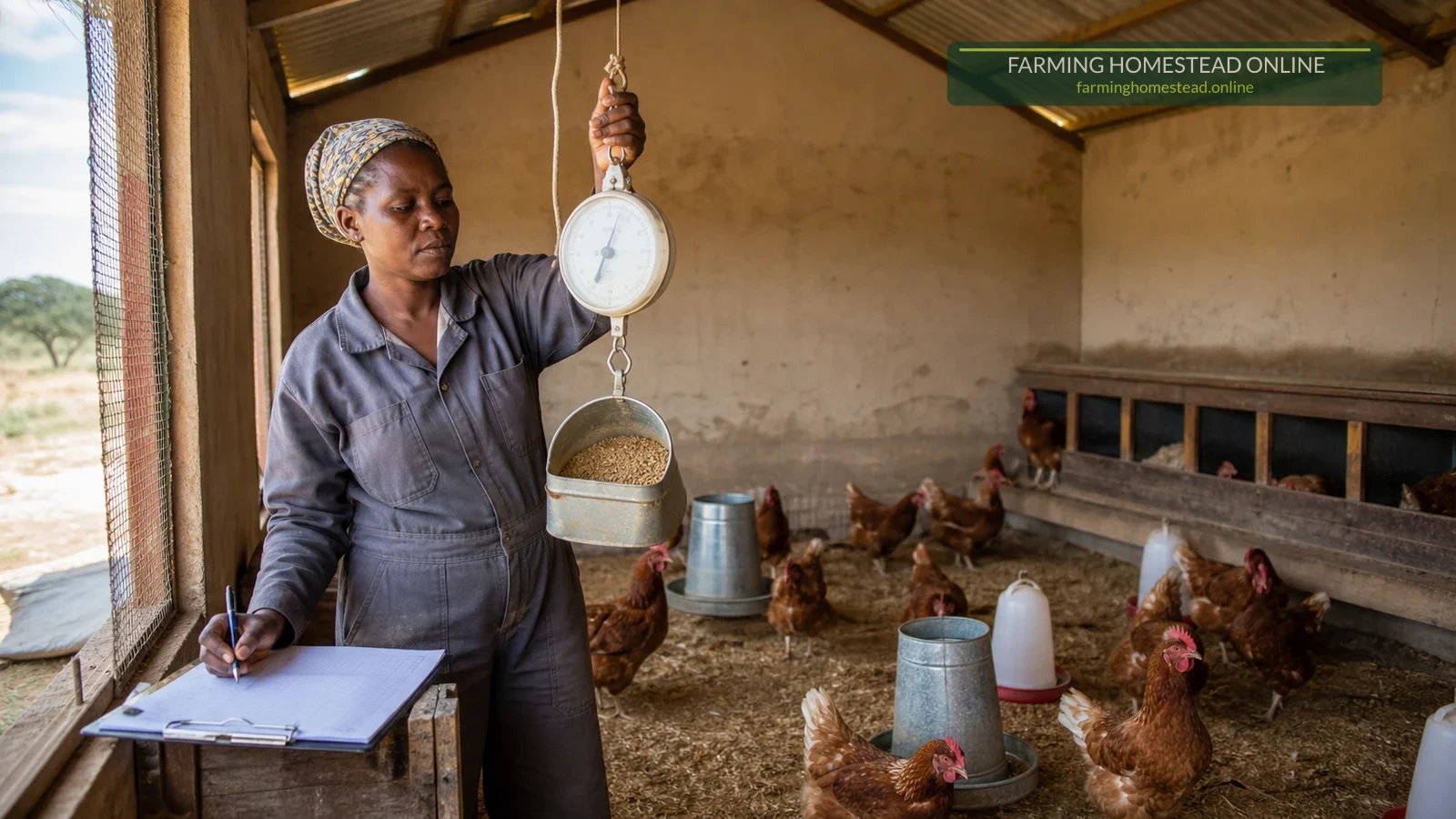
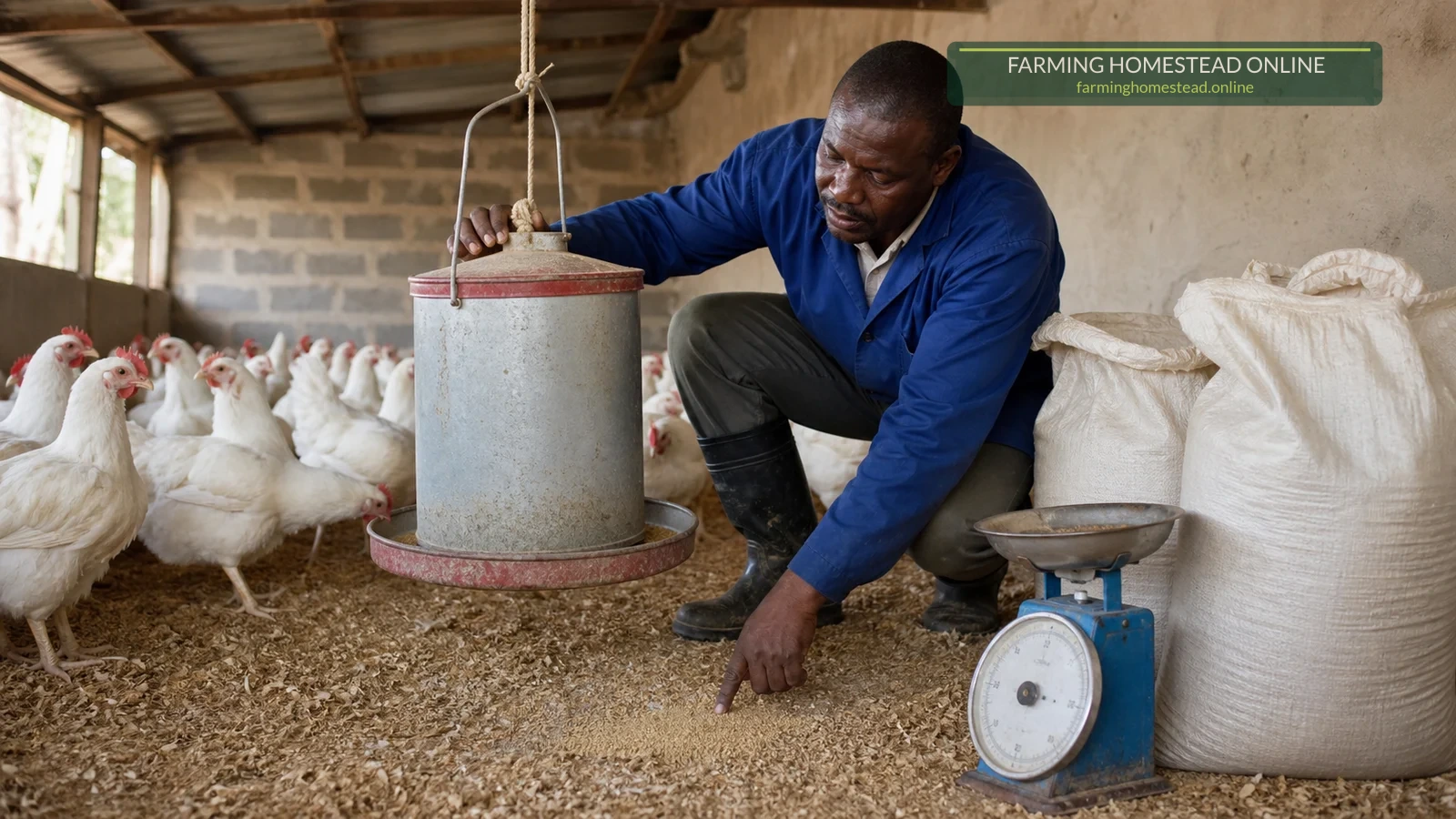
Record every bag entering the store, every bag issued and the closing balance. Weigh a bag that looks partly used instead of guessing. Check the floor around feeders. A small daily loss multiplied across many birds and many days becomes a large hidden cost.
Do not cut feed quality blindly to save money. Birds need a balanced ration for their stage. Cheap feed that slows growth, reduces laying or causes uneven birds can cost more per saleable bird or tray.
3. Mortality and poor performance
A dead bird has already consumed money. It may have used a chick, feed, heat, labour and medicine without creating a sale.
Mortality is visible. Poor performance is quieter.
A live bird that grows slowly, converts feed badly, lays fewer eggs or reaches the market late also reduces profit. Longer production means more feed, labour, power and risk.
Your daily record should show:
- opening bird count;
- deaths and removals;
- feed issued;
- water problems;
- temperatures or unusual weather;
- treatment or vaccination activity;
- sample weights for meat birds; and
- eggs collected, cracked and rejected for layers.
If performance changes, act early. Do not wait until sale day to discover that birds are underweight or laying has dropped.
4. Disease prevention, not only medicine
Some budgets include treatment after birds become sick but forget the cost of keeping disease out.
Biosecurity costs may include disinfectant, footbaths, protective clothing, cleaning tools, controlled entry, safe carcass handling, downtime between flocks, pest control, vaccination and professional animal-health support.
These costs protect the whole flock.
In 2026, a joint Government of Zimbabwe and FAO poultry-and-dairy roadmap highlighted disease prevention, biosecurity, nutrition, feed systems, training and market incentives as connected priorities. That is good business sense. Prevention, feeding and selling cannot be separated.
Use a vaccination and health programme suited to the birds, supplier and local disease conditions. Keep the dates, product, batch details, method and person responsible. When something is wrong, seek qualified veterinary or livestock-production help early instead of buying random medicine from comments.
5. Water, heat, lighting and bedding
Water may come from your borehole, but pumping is not free. Include power, pump wear, tank cleaning, pipe repairs and water treatment where needed.
Brooding needs reliable heat. Layers may need a managed lighting programme. Every unit needs dry bedding or a clean floor system, ventilation and daily checks.
Add:
- electricity, gas, charcoal or other approved heat source;
- bulbs, fittings and backup lighting;
- bedding purchase and transport;
- drinker and pipe repair;
- tank and line cleaning; and
- emergency water or power arrangements.
The cost of backup may feel unnecessary on a good day. It becomes valuable when a hot afternoon, power failure or broken pump threatens the flock.
6. Labour—including family labour
If a family member feeds birds, cleans, collects eggs, sells, answers customers and guards the unit every day, the work has value.
A business that shows profit only because somebody works for free is not yet showing its true operating cost.
Record labour hours by task for one month. You may discover that selling small quantities to many distant customers uses more time than production. Or egg cleaning, sorting and delivery may need a better routine.
This does not mean the farm must pay a full salary immediately. It means the owner should know what the enterprise requires and whether expansion will need another worker.
7. Packaging, transport and selling
The bird’s farm-gate price is not the same as a delivered price.
Selling costs can include:
- crates, trays, boxes or bags;
- labels and phone data;
- slaughter and cold handling where part of the model;
- loading;
- fuel or hired transport;
- market or vendor fees;
- delivery losses;
- returns; and
- the owner’s selling time.
Map the customer route. Ten small deliveries can consume more profit than one planned collection point.
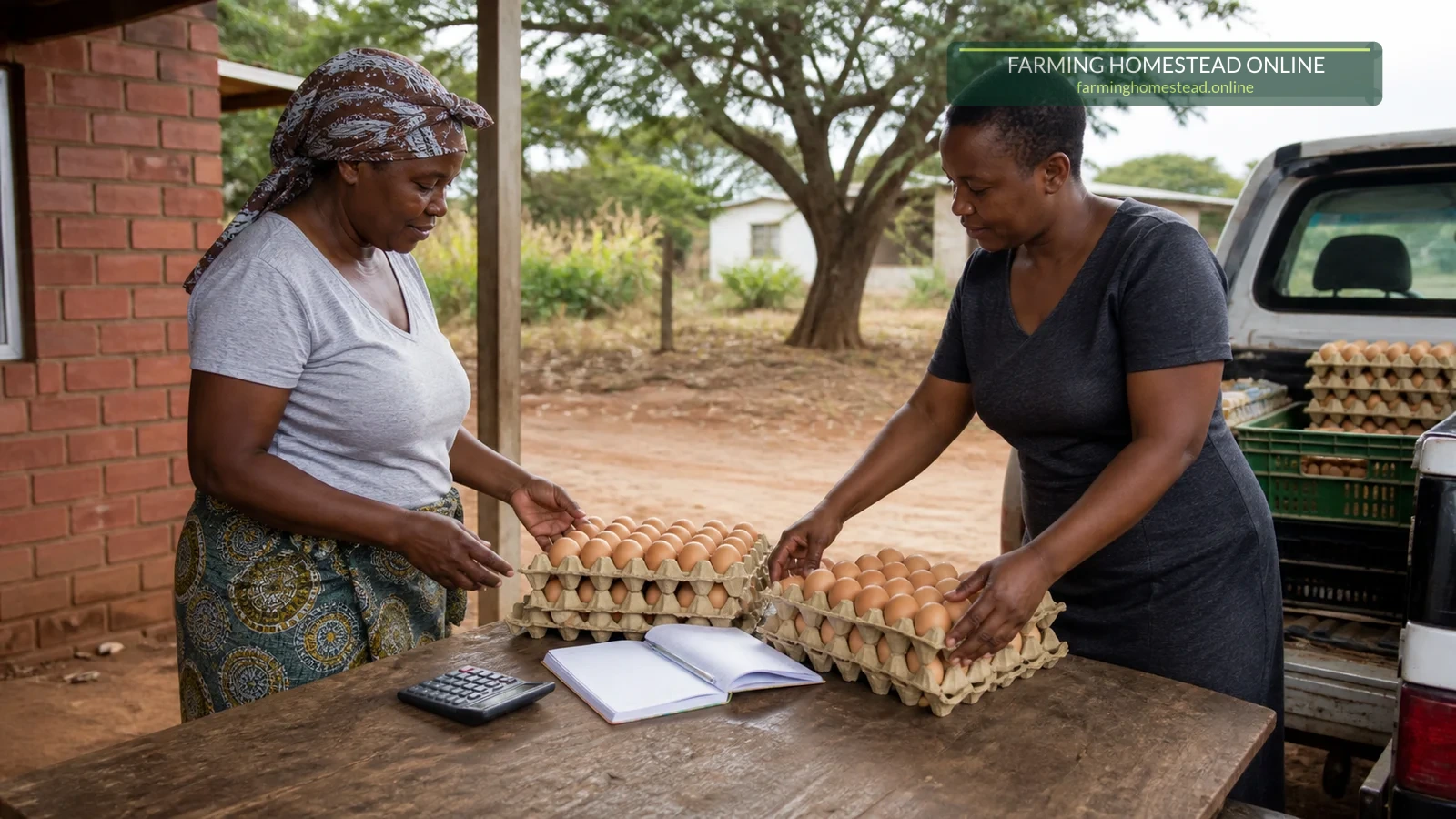
For eggs, track trays issued and returned. Count cracked, dirty or undersized eggs separately. For live birds, confirm the buyer’s preferred weight, collection date and quantity before birds stay longer and continue eating.
8. Customer credit and money not yet received
“Sold” and “paid” are different.
If a customer takes 30 birds today and promises to pay next week, the sales book may look strong while the feed account is empty. Late payment can force the farmer to borrow for the next flock.
Keep a simple debtor list:
| Customer | Product | Amount | Delivery date | Due date | Paid date | Balance |
|---|
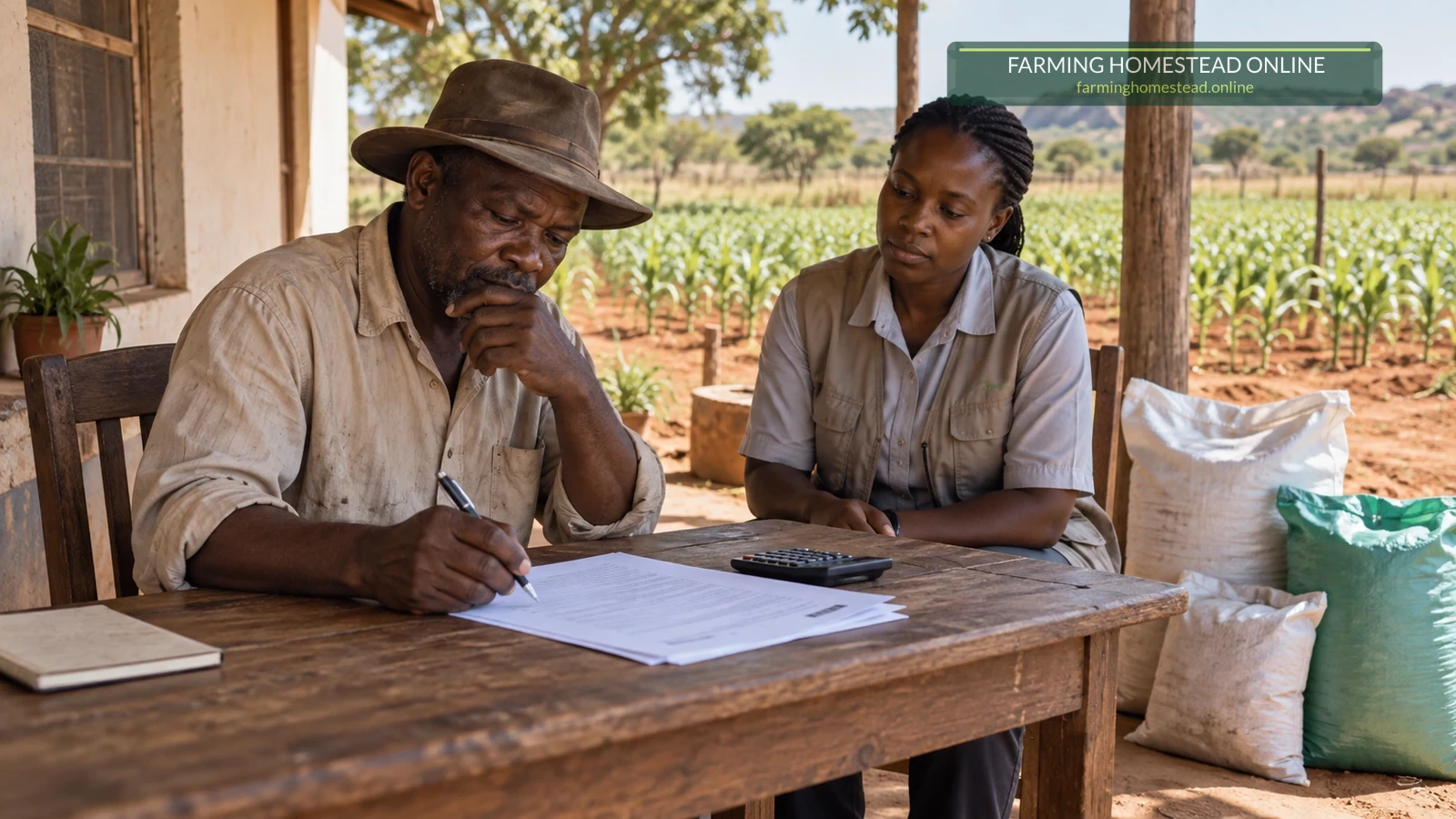
Set a credit limit. Stop new credit when the old balance is overdue. Confirm orders and payment terms in writing, even if it is a simple WhatsApp message.
Count revenue in two ways: sales made and cash received. Cash received keeps the flock moving.
9. Buildings and equipment wearing out
A poultry house, feeders, drinkers, brooder, cages, fencing and water system last longer than one flock. They are not free after the opening day.
Put aside a small amount from every cycle for:
- roof and mesh repair;
- replacement feeders and drinkers;
- pump, tank and pipe work;
- brooder or electrical repair;
- floor or drainage work; and
- eventual unit replacement.
This is how the project pays for its own future instead of asking the owner’s salary to rescue it every year.
Placement also matters. A badly positioned poultry unit can create drainage, smell, access, disease-control and expansion problems. A whole-property layout avoids expensive rebuilding.
10. The next flock
The most forgotten cost is the money needed to start again.
The cash from today’s birds must first protect the next cycle: chicks or replacement stock, feed, health needs, cleaning, bedding, heat and operating cash until the next sale.
If all the sales money is treated as spendable profit, the business restarts from zero every time.
Create separate pots or ledger lines for:
- next-cycle inputs;
- bills already owed;
- repair and risk reserve;
- approved expansion; and
- owner profit.
Profit comes after the first four are understood.
A simple one-flock calculation
Use this before placing birds and again after the final sale.
Expected sales
Number of saleable birds × realistic average price received
Add any other real income, such as manure sales, only when there is a believable buyer.
Complete flock cost
Add:
- placed birds;
- all feed used;
- vaccination, prevention and veterinary costs;
- heat, power, water and bedding;
- labour;
- packaging;
- transport and selling;
- mortality and rejected-product effect;
- building and equipment reserve;
- finance cost, if any; and
- unpaid customer balances that may not be collected.
Cash profit
Money actually received minus money actually spent and costs still owed.
Business profit
Sales earned minus the full economic cost, including labour and asset wear.
The two figures help answer different questions. Cash profit tells you whether the next cycle can move. Business profit tells you whether the enterprise is truly rewarding the work and capital.
The four numbers to check every week
You do not need a complicated computer system. Start with four numbers:
- Birds alive or productive layers on hand
- Feed used and feed remaining
- Saleable output: weight, birds or eggs
- Cash received and customer balances
Add short notes for deaths, illness, unusual feed use, water failure and buyer complaints.
If the physical count and book do not match, investigate that week. Do not wait until the flock ends.
More birds are not always the answer
When profit is weak, many farmers try to double the flock. That doubles the money exposed to the same problem.
First find the bottleneck.
- If feed waste is high, fix the feeding system.
- If birds grow slowly, check health, feed, water, temperature and stocking conditions.
- If buyers delay, improve order and payment rules.
- If transport is expensive, create collection points or fewer delivery days.
- If the market wants a different weight or egg size, plan production around that demand.
- If records are missing, run one controlled cycle before expanding.
Expand the part that already works.
Choose a poultry system, not only a bird
The Two-Hundred-Layer Egg and Market-Garden Project Pack connects egg production to a market garden, water, manure use, buying and phased construction.
The Drought-Grain, Indigenous-Chicken and Milling Hub Project Pack is for a dryland model that links grain, indigenous chickens, storage and a milling service.
The Chick Hatchery, Sunflower Pressing and Service Hub Project Pack focuses on chick supply, oilseed pressing and services to nearby farmers.
Each serves a different customer and uses money differently. The right question is not “Which chicken makes the most money?” It is “Which complete system fits my water, market, skill and budget?”
Keep the money that your chickens make
Poultry can create regular food and income. It rewards daily attention and punishes guesswork quickly.
Count everything. Protect feed. Prevent disease. Sell to planned customers. Collect the money. Reserve the next cycle. Expand only after a clean record shows where the profit comes from.
Farming Homestead Project Packs give you the layout, quantities, build order, operating flow, cost structure, risks and records behind a complete project. View the free preview and buy the full Pack for US$10 through the current WhatsApp process.
Compare all poultry, livestock and mixed-farm Project Packs.
Frequently asked questions
Why am I selling chickens but not making profit?
You may be counting turnover instead of profit, missing feed waste and selling costs, carrying too much customer credit, losing birds, keeping slow birds too long or spending the next flock’s money. Rebuild the result from actual records.
What is the biggest poultry cost?
Feed is normally the largest recurring cost in intensive poultry, so feed price, quality, use and waste deserve close attention. Your own records should confirm the share for your system.
Should I mix my own chicken feed to save money?
Only with sound formulation, reliable ingredients, correct mixing and quality control. A cheap but unbalanced ration can reduce growth, laying and bird health. Compare cost per saleable bird or egg, not only cost per bag.
Are layers or broilers better for a beginner?
Broilers can return cash faster but need a timed market for whole batches. Layers take longer to reach reliable production but can create frequent egg sales. Water, feed capital, housing, skill and buyer access should decide the fit.
How often should I calculate poultry profit?
Check feed, birds, output and cash weekly. Calculate the full result at the end of every flock or monthly for layers. Use the result to change the next cycle before expanding.

Thank you !